Author: Greg O'Neal, CCDS, CEPS

Device Clinic Manager

Case Studies: Partnering with a 3rd Party Vendor for Comprehensive Cardiac Device Clinic Management Solutions

How do Cardiology Clinics Benefit from Partnering with A Comprehensive Device Clinic Solutions Provider

Device clinics face the ever-growing challenge of managing patient loads efficiently, particularly in the realm of remote monitoring. This challenge underscores the need for innovative solutions that can streamline operations and enhance patient care without compromising on quality. This blog delves into some real-world case studies of how partnerships with a specialized third-party vendor, PrepMD, have revolutionized the management of cardiac device clinics.

This blog explores the journey of various clinics as they navigate the complexities of modern cardiac care. Through short case studies, we reveal how these clinics, by partnering with expert third-party vendors, have successfully integrated advanced remote management solutions into their practice. These partnerships not only address the logistical challenges of CIED remote monitoring but also bring a wealth of clinical expertise, technological innovation, and improved operational efficiency. As we delve into these cases, the benefits of such collaborations become clear, showcasing a path forward for clinics striving to excel in today’s fast-paced healthcare landscape.
Case Study 1: Large Cardiology Device Clinic Needs Additional Trained Staff to Remote Monitoring Workload

The Device Clinic Problem
A prominent device clinic recognized the strain on its resources, particularly in managing the burgeoning patient load requiring remote monitoring. The need for additional, well-trained staff became critical to maintain the high standard of patient care and manage the workload without overburdening existing staff or compromising on service quality.

The Solution Provided
After in-depth consultation to understand the clinic’s unique challenges, a tailored solution was crafted to address their challenges. The clinic opted for a bundled approach, leveraging the cost-effectiveness and expertise of PrepMD’s solutions. This comprehensive package included PrepMD’s remote monitoring services, along with access to PrepMD’s in-clinic staffing solutions. By integrating these services, the clinic was able to significantly enhance its operational capacity, ensuring that the increased demand for patient monitoring was met with a high degree of professionalism and care.

Case Study 2: A Large Device Clinic Utilizing A Different Remote Monitoring Software Needs Help with Staffing

The Device Clinic Problem
A well-established Device Clinic, previously utilizing software from a different provider, encountered significant hurdles in recruiting trained and experienced clinical staff to manage their remote monitoring load effectively. In their quest for a solution, the clinic reached out to PrepMD, known for their expertise in staffing and training in the cardiac device management sector.

The Solution Provided
In the course of our strategic discussions, the clinic recognized a comprehensive bundled solution not only addressed their staffing concerns but also delivered tech efficiencies. By bundling of PrepMD’s proprietary software with in-clinic staff solution, the clinic could substantially reduce their costs. This bundled approach was anchored by PrepMD’s robust hire-train-deploy-develop model, ensuring a continuous pipeline of skilled professionals. This software is designed for ease of use with a steep learning curve, which further streamlines clinic workflows and elevates the efficiency of patient management processes.

Case Study 3: A 4500+ Cardiac Patient Clinic with a Growing Remote Transmission Backlog Needs Help

The Device Clinic Problem
A 4500+ patient clinic needed a solution to better service their cardiac device patients. While alerts were being triaged, they had an ever-growing backlog of over 2,000 remote transmissions. Additional stressors included a newly hired staff who were overwhelmed with patient care and administrative responsibilities. All this led to regular CIED remote transmissions sometimes waiting weeks for review. The clinic leadership knew they needed help.

The Solution Provided
PrepMD worked tirelessly to clean up the clinic’s remote monitoring transmission backlog within 8 weeks, while also managing all daily scheduled and alert transmissions. This 4,500 cardiac patient clinic staff continues to rely on a dedicated PrepMD team of IBHRE® CCDS and CDRMS Certified Specialists for their expert clinical knowledge and a collaborative trusted approach, leading to the best outcomes for their patients.

Case Study 4: Large Network of Cardiology Clinics Needs Help Streamlining their Workflow

The Device Clinic Problem
A large healthcare network of cardiology clinics was unable to keep up with the sheer volume of remote monitoring transmissions. The network contained multiple cardiology clinics all operating under different work streams. The clinic leadership was seeking a solution to streamline their processes. As a result, regularly scheduled pacemaker, ICD and ILR remote reports were piling up at all clinics. This transmission backlog and clinic inefficiencies was leading to a very frustrated and overwhelmed clinic staff.

The Solution Provided
After meeting with the Nurse Manager and the clinic staff, the PrepMD team was able to find an integrative remote monitoring solution where we work with the clinic as partners. For example, our team led by IBHRE® Certified Cardiac Device Specialists customizes their service, making adjustments sometimes daily to the report writing and workflow. This allows us to seamlessly work within the protocols set by the clinic leadership. As such, we provided a solution to lessen their workflow burden and allow for prompt triaging and report writing for device transmissions.

Case Study 5: Cardiology Device Clinic Needs a Remote Monitoring Service Provider with a Stronger Alert Management Protocol

The Device Clinic Problem
A clinic was frustrated with the slow response to life threatening alerts from their previous remote monitoring service provider. Some high priority alerts from the previous service provider had not been delivered to the clinic for 2 months, leaving clinic staff frustrated. Additionally, patients were fearful that their devices were not monitored appropriately. As a result, the clinic was in search of a service provider with a tighter alert protocol procedure.

The Solution Provided
After consultation with the clinic we implemented a customized alert protocol to fit the clinic’s needs and expectations, therefore, never leaving the clinic staff or patients to worry about the monitoring of their device alerts again. This clinic wanted a service model they could trust and found it at PrepMD. Our service includes same-day alert reporting 5 days a week from a team lead by IBHRE® certified cardiac device specialists.

Case Study 6: Medium-Sized Cardiac Device Clinic Needed Report Writing Improvements for Easier Identification of Actionable Reports

The Device Clinic Problem
A medium-sized cardiac device clinic found itself falling behind with its remote CIED transmissions due to reporting inefficiencies. As a result, the clinical staff became overwhelmed because they struggled to write concise and clinically relevant reports. They wanted their reports written in a manner to easily identify actionable items to ensure the best patient care.

The Solution Provided
The PrepMD team worked with the cardiology clinic staff to implement a streamlined approach to remote report writing. Our IBHRE® certified cardiac device specialists craft reports which highlight the most important aspects of the transmissions. This approach not only allowed the doctors and staff to quickly review and assess reports, but also led to less actionable reports being missed.

Case Study 7: Cardiology Clinic Searching for a Remote Monitoring Service Provider to Ensure Billing and Reimbursement Accuracy

The Device Clinic Problem
A cardiology clinic needed guidance on a new workflow which would lead to more accurate billing to solve reimbursement issues. Therefore, the doctors were worried about a loss of revenue and had to put billing on hold until a solution could be found.

The Solution Provided
PrepMD was able to immediately implement a simple solution to ensure a proper billing workflow. As a result, the physicians at this clinic were able to receive the correct payment for remote reports on their cardiac device patients. The IBHRE® certified staff at PrepMD assigned a dedicated team to this clinic enabling a quick resolution so the clinic was able to resume billing very quickly.

Medical Technology hands on keyboard

Cardiac Device Remote Monitoring: A Great Marriage of Technology and Patient Care

At the ’22 Boston Heart Rhythm Society meeting, Fran Moriarty (PrepMD Director of National Accounts) sat down for Podcast conversation to discuss the cardiac device remote monitoring career space.

Beth Davenport is the Clinical Director and Amy Tucker is the Advanced Cardiac Device Nurse for Sanger Heart and Vascular Institute cardiac rhythm device clinic and remote monitoring center.

What Makes Cardiac Remote Monitoring a Great Career Choice?
Beth and Amy were eager to share stories about their careers and explain what they find rewarding about their jobs every day. It seemed to boil down to embracing technology, working alongside smart people with the goal of providing the best patient care.

“Our clinicians make a difference in people’s lives every single day, whether it’s their heart failure management or they have onset AFib, we’re identifying it, we’re getting them to the physician before they have a stroke.”
-Beth on the critical importance of having a highly trained, clinically competent staff

How are Cardiology Clinics Managing the Rapid Growth in Device Remote Monitoring?
Sanger Heart tells the universal story of cardiology clinics across the U.S. of the rapid growth in remote monitoring as the Standard of Care. Back in 2005 the Sanger cardiac patient population was only about 3,500 patients with only 525 billable remotes for the entire year. Fast forward to 2020 where billable remote monitoring took place for all 12,000 patients and nearly 32,000 billable remotes.

Today, Sanger has about 20 clinicians, including cardiac device nurses, cardiac device specialists, and outreach access specialists. Successful growth at Sanger was positively impacted by the addition of the Outreach Specialist. The Outreach Specialist helps troubleshoot communication and administrative responsibilities, freeing up the clinical staff for patient care.

“It just grew so rapidly, and we found out how many lives we were saving by early detection and of potential problems,”
-Amy on the tremendous growth of remote monitoring

Identifying Staffing Needs in a Cardiology Clinic
At Sanger, they attribute hard-work, thorough analysis, and supportive leadership as the building blocks to how they grew their clinic to what it is today. Two different Lean Sigma studies were employed to identify ways to make improvements in the clinic’s workflow process. This analysis allowed for the creation of an accurate staffing model. They were able to identify the amount of work each clinician and outreach specialist can accomplish in a day and the time it takes to care for a group of patients.

“That proof of concept is really helpful when you’re talking to administrators and explaining why you need more staff.  What we’re doing is revenue generating, so I think one of the important things for administrators to remember is that device management is most importantly about keeping patients safe.”
-Beth on the results of the staffing studies

COVID-19 helped to force some positive changes
COVID-19 has certainly presented a challenge for healthcare across the board. In this conversation, Beth and Amy explained how COVID served as the prevailing force for change to embrace technology and employ change for the greater good at Sanger. At the onset of COVID their clinic went from about 55% of patient encounters through remote monitoring to 98% in a matter of only a few months. Prior to COVID they had been operating under assumptions that their typical aged patients would likely resist the technology.

“We were wrong. They became very thankful that we could keep an eye on their device without them coming into the office.”
-Beth on their patients’ willingness do virtual visits

The Challenges of Training and Retaining Clinically Competent Staff
Not surprisingly, in a field as complex as cardiac, you’ll find many challenges in terms of recruiting and training a clinically competent staff. Remote monitoring data is connected to a patient and the alerts can be life threatening, with Beth and Amy each telling stories about 911 calls. At Sanger they have a minimum 6-month orientation period for their employees. It takes years to become a true expert in this field, according to Beth.

“These are people that are looking at data that is connected to a patient to make sure that they’re safe …There are so many levels of critical thinking…You have to train people to understand accountability and they have to know all the devices.”
Beth on the importance of a highly trained staff

The patients coming in person into the clinic may be the most complicated cases with complex device reprogramming needed, but the patients who are at home require thoroughly trained specialists to determine if they also need to be seen in clinic. The remote monitoring specialist is assessing patient data for device leads, battery life, device advisories, software updates, and looking for conditions such as high-rate episodes, or onset atrial fib. Again, it’s a big responsibility, requiring a highly trained staff.

The Future of Cardiac Remote Monitoring
At Sanger, the clinicians take the time to educate patients on their own cardiac conditions. Encouraging patients to take more ownership of their own cardiac conditions should ultimately lead to improved understanding and outcomes. Beth and Amy agreed that increased patient engagement will be front and center for changes coming ahead in the cardiac device space, similar to the way diabetes patients are engaged on a daily basis with their own care. Personal wearable devices and other technologies will continue to expand and change the landscape by bringing more knowledge directly to the patient.

Careers in Cardiac
When the topic turned to choosing a career in cardiac devices, Beth and Amy both describe their own experiences in this career space as technically challenging and clinical rewarding, particularly so with remote patient care seeing so much change and growth right now.

Beth called it the “great marriage of technology and patient care,” with Amy adding, “We need to do a better job of talking about this specialty and getting the word out.”

Thanks to Sanger Health for an insightful interview to help spread the word about the rewarding career field of cardiac device patient remote monitoring. Not many people outside of healthcare know what a cardiac device specialist is or know about cardiac remote monitoring specialists. Young people and college students thinking about a career in healthcare typically know about the traditional roles and won’t necessarily hear about a device specialist at their college career center.

They might know about an ER nurse, but as Beth said, “You don’t see us on Grey’s anatomy.” 

Team of clinicians at meeting

Determining Your Device Clinic’s Alert Management Protocols

Rob Lerman, MD, CMO and Kent Seckinger, CCDS, Customer Success Director, PrepMD Clinic Solutions Leadership Team


Management of clinical alerts is unquestionably one of the most challenging tasks for remote monitoring programs. Optimizing alerts saves staff time and focuses energy on clinically relevant issues. Customizing alerts addresses the variations in care that are seen between clinicians. Development of a clear clinical escalation policy ensures expedited communication between the care team and reduces the time between clinical event and clinical action.

Whenever a remote monitoring program is started or reviewed, it is helpful to bring all the clinical stakeholders together for a discussion about alert programming. That includes anyone from the physicians and advanced practice providers (APPs) who see escalations to the nurses and techs that may be the primary alert reviewers.  As difficult as it may be to get physicians and APPs to sit down for such a meeting, establishing their preferences up front saves a great deal of everyone’s time in the long run. It is important to go through all the manufacturers’ alerts with fresh eyes and select whether they are programmed on as a clinic default and if so to what level of urgency (red vs. yellow, etc.) If possible, it is helpful to create categories of patients based on indications and create standardized programming parameters for those patient groups. For example, patients with complete heart block should likely all have the alert for excess RV pacing turned off. A clinic may want to have one standard set of alerts programmed for primary prevention ICD patients and another for secondary prevention patients. While there will always be customization, if you can standardize the alerts as much as possible across your population, it will reduce confusion and make communication that much easier.

Patient-level customization should start at or even before implant with a conversation between the implanting physician and industry representative. Implanting physicians will often have a wealth of clinical information about the patient which will inform device programming, and device company representatives typically know the details of features and algorithms better than anyone else. An experienced device company representative will learn the programming preferences of the physicians and clinics they serve and will often quickly learn the typical alert preference programming. Nonetheless, the implanting physician should always confirm the proper programming for an individual patient, especially when it deviates from the customary.

The first clinic visit after implant is another great opportunity to check in with the clinicians on alert programming for an individual patient, especially if the follow-up staff is not the same as the implant staff. The lab or operating room is often a hectic environment and there isn’t always an opportunity for a thorough review of alert parameters at implant. The follow-up wound check may provide a better opportunity to raise questions such as whether a patient in atrial fibrillation will be a candidate for cardioversion and thus should have AF alerts programmed on or whether that patient is in permanent AF and should have those alerts turned off. Making the initial investments in time to program alerts properly pays dividends over the long term.

One issue that is often a source of variation in programming is whether to program alerts as “red” or “yellow” or other. Certainly, there are some alerts that are not programmable and default to red status for almost all manufacturers. Examples of those would be a battery at end of life or a hardware reset. Other alerts can be programmed as red or yellow, or for many Medtronic alerts, as a website only alert that will not be identified by color. For the most part, red or yellow alerts are displayed at the top of the dashboard on the manufacturers’ remote monitoring portals, so their main benefit is that they are readily identifiable as issues requiring attention. Many device nurses or techs will start their reviews by attending to the red or yellow alerts, so those designations may have a direct impact on clinical workflow. Some physicians or APPs will direct their clinical escalations based on alert color, such as “Only call me for red alerts”. Others may treat red and yellow alerts identically. While alert color is helpful, not all clinically actionable events may be identifiable by a red or yellow alert. Episodes of pace-terminated ventricular tachycardia or a single ICD shock may not always be eligible for red or yellow alert designation, depending on the manufacturer.

Many alerts offer opportunities to customize further based on parameters such as arrhythmia duration or heart rate. For example, a patient with known short bursts of paroxysmal atrial fibrillation could be programmed to alert only if an episode lasted for a prolonged period of time or if the AF burden met certain criteria. Likewise, a patient with permanent AF with controlled ventricular response could be programmed to alert only if the ventricular rate exceeded a certain value and a patient with known brief sinus pauses could be programmed to alert only for prolonged pauses. This contrasts with for example, a patient with a history of cryptogenic stroke for whom you may want to be alerted for any episode of AF that might identify the need for anti-coagulation. Customization of alerts in this manner goes a long way towards increasing the odds that an alert will be actionable. It is important that members of the care team who are adjusting alerts have access to important clinical information such as anti-coagulation status which may change over time.

Many implantable cardiovascular monitors, or implantable loop recorders (ILRs), are seeking to decrease the large burden of non-actionable alerts by offering indication specific programming as a “bundle”. For example, a patient with suspected ventricular tachycardia may have the “Tachy” parameter programmed on as a red alert but the “AF” parameter off altogether. Often clinics will program alerts broadly “On” at implant but aggressively narrow the alert parameters as time goes on.

Regardless of the best intent, some false positive alerts are inevitable. ILRs are probably the most common culprits because of the nature of the device. Given that they are not intracardiac but subcutaneous their signals are subject to more external disruption and noise than intracardiac leads. Additionally, since like surface leads they have combined atrial and ventricular electrograms, sophisticated algorithms to differentiate atrial from ventricular arrhythmias based on A-V relationships are often unavailable. Of course, even pacemakers and ICDs often have trouble differentiating atrial from ventricular tachycardia and may generate false positive alerts. Programming around these can be quite difficult. The programming of ILRs is often more “liberal” with respect to arrhythmia identification, because as diagnostic-only devices they cannot treat the arrhythmias that occur, raising the importance of identifying rhythm abnormalities (such as long pauses or tachyarrhythmias) so that they can be treated before adverse events occur. Some physicians are less interested in being alerted for events that the device has treated, such as a single ICD shock.

Minimizing false positive alerts decreases alert fatigue amongst clinicians, but even when this isn’t possible, the primary alert reviewer needs to remain vigilant and at least briefly review every alert. A true-life example where this played out was a woman in her mid-20s with an ILR who transmitted over 100 false positive alerts for sinus tachycardia before she had an episode of true ventricular tachycardia at over 200 bpm. Many ILRs now allow reprogramming remotely which would have allowed us to filter out the sinus tachycardia during her daily workouts, but even when that is unsuccessful it is important to review all data, even though it can be frustrating at times.

Different physicians may have very different attitudes about what kind of arrhythmias are important, especially when considering therapy such as catheter ablation. Whereas one cardiologist may not be interested in asymptomatic episodes of ventricular tachycardia below the rate cut-off of an ICD, others are more aggressive about ablation of complex arrhythmias and may want to be aware of those same arrhythmias. Similar philosophical differences apply to atrial arrhythmias, so again communication between physicians and the primary event reviewers is paramount. In organizations with multiple physicians, it is often helpful to have a physician champion for the remote monitoring program who can often drive at least some level of standardization of alert criteria.

The final, and in some ways, the most important piece of the alert management puzzle is development and operation of a coordinated cohesive clinical escalation policy. The escalation policy determines how clinical information gets turned into clinical action. Once the primary reviewer, be it a clinic nurse or tech or a third-party remote monitoring specialist, determines that an alert or event is real, what do they do with that information? What types of events should generate a report? What types of events require escalation to another member of the care team and how should that information be conveyed? Is a note in the EHR sufficient or does it warrant a phone call or text message? To which member of the care team does the message go? Does the physician ever want to be interrupted in clinic or in the lab and if so, for what? Are there specific clinical scenarios which merit that a patient should call 911 or go to the emergency department? Are there others when scheduling a clinic visit is more appropriate?

Clear delineation and documentation of the clinical escalation policy reduces stress for the care team and ensures that urgent situations get addressed quickly and that no one is interrupted with unnecessary calls or messages. Typical issues that might be addressed include episodes of atrial fibrillation- how long or fast do they need to be in order to be escalated? How is an anticoagulated patient handled differently from one who isn’t anticoagulated? How about episodes of nonsustained ventricular tachycardia in both ICD and pacemaker patients? How long does a pause in an ILR patient need to be to require urgent attention? Don’t forget to address both normal working hours as well as nights, weekends, and holidays when the entire team is not available. An upfront investment of a little time to define escalation policies improves patient care and goes a long way towards avoiding awkward and sometimes unpleasant conversations.  

Clinical escalations should always be documented, whether in the EHR, remote monitoring software platform, or elsewhere and the escalation protocols should be a living document that is periodically reviewed. Emerging clinical data, changes in clinician staff, or improvements in clinical operations are just a few of the reasons that protocols may need to be changed. At minimum, an annual stakeholder review improves the chances that everyone is staying on the same page.

Data deluge and alert fatigue are some of the principal barriers to adoption of remote monitoring for CIEDs. Careful attention to alert management can minimize false positive alerts and keep the focus on moving from clinical event to clinical action. Standardizing alert parameters as much as possible by device type and patient indication can simplify clinical workflows, but customization of alerts for individual patients further refines the data that needs review. Developing clear clinical escalation policies improves efficiency and patient care, while minimizing unnecessary distractions.

Questions about this article should be directed to the PrepMD Device Clinic Solutions Leadership Team.

Black clinician in hospital corridor

Cardiac Device Clinic Workflow Improvements: Recommendations from Experts in Remote Monitoring

It certainly is an understatement to say that running an effective and efficient cardiac device remote monitoring clinic is a challenge. Any clinic manager who is evaluating an existing remote monitoring program for improvements or who is launching a new remote monitoring program must dedicate time to analyze their clinic’s current staff, workflow, and capabilities against what is needed. This will help anticipate and stave off many of the most common challenges faced by device clinics – problems such as staff burn-out, unscheduled patients and incorrect billing. 

Every clinic has a unique workflow, complications, and issues when it comes to running a cardiac device remote monitoring program. Clinics receive tremendously large amounts of device transmission clinical data coming in daily. Many clinics do not realize the value of remote monitoring and operate without a dedicated remote monitoring staff. Clinic managers may underestimate the amount of hidden workflow involved in remote monitoring which causes many pain points for staff struggling through the heavy workflow. Many clinics struggle with the standardization of an alert protocol and alert criteria. There is certainly a prevalence and frequent misunderstanding of the value and requirements of remote monitoring which commonly leads to ineffectively managed remote monitoring programs.  

“Unfortunately, there is a lack of a unified approach to remote monitoring across the entire cardiac device remote monitoring space. This leads to confusion of what is needed to run a device remote monitoring program. There is an unfortunate tendency where this type of remote care can lead to a devaluing of the work being performed, simply because there is not a face-to-face patient interaction taking place, the value of the clinical care should not be minimized.” Jess Rizzo, CCDS, PrepMD Clinical Operations Director
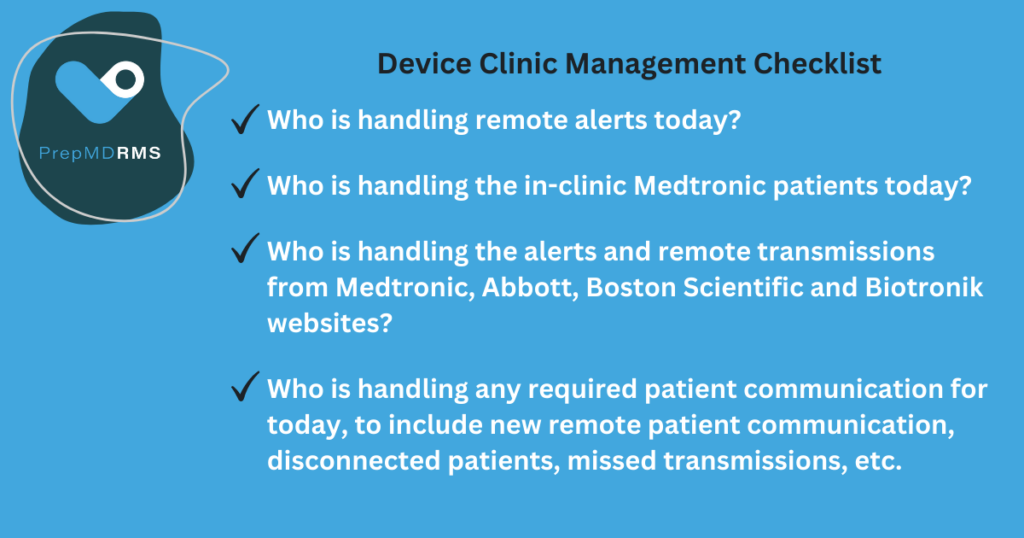
Without an established Remote Monitoring Process in place, How are these questions answered each day?

“it’s important to remember that all of these device clinic remote monitoring tasks are essential, including the variable and hidden tasks that are difficult to quantify. In fact, not recognizing them can certainly lead to a loss of revenue, missed clinical needs, and that overburdening burnout feeling that many clinicians feel.” 

Clinical Workflow: Who, What and How?

In order for a remote monitoring program to run effectively and efficiently the following must be clearly delineated: the tasks (what), the who (which clinic staff is doing each task) and how (training needed, communication, and timeline/processes for all tasks) must be clearly delineated to ensure quality. 

Big Picture Questions to Analyze a Cardiac Device Remote Monitoring Program 

  • What: What are the required tasks for a best-in-class remote monitoring program? 
  • Who: Who on the clinic’s staff is best suited to handle each of these required tasks?  What training is required?
  • How: How will these individuals accomplish the required tasks? What is the overall process and what are each individual contributor’s roles and expectations? What quality measures need to be in place?

Beyond the big picture questions, there are many more questions and details that go into implementing and improving a device remote monitoring program. Each clinic handles things differently, so who is responsible for all the tasks of remote monitoring is extremely variable for each clinic. Efficient handling of remote monitoring is possible, but only with the proper staff and workflow. It is infinitely difficult to quantify all of the tasks of remote monitoring because the same task might take 30 minutes one day and three hours the next. A relevant time and workflow study published in JMIR Cardio 1, “Clinic Time Required for Remote and In-Person Management of Patients With Cardiac Devices: Time and Motion Workflow Evaluation” is a persuasive argument for the efficiencies of remote monitoring. However, this study certainly does NOT take into account all the intricacies and requirements regarding remote monitoring workflow, tasks, training and more.

  • Staffing: Who is/are the right individual(s) on the staff for each of the required tasks? Is it feasible for one  or two individuals or is a dedicated team required for certain tasks?
  • Monitoring of the device company websites: adding, deleting, or transferring patients clinic to clinic. It takes time to go through each of the manufacturer’s websites plus clinic sites.
  • Report Triage: So here is where you’re deciding basically the seriousness of each report. You’re checking to see if the alerts are actionable. You’re checking to see if that patient initiated is actionable. It can include alerts or concerns within the scheduled reports. This also includes making sure those actionable reports or alerts are brought to the proper clinical staff, whether that be to a PA or a physician. 
  • Report Construction: What are the tasks and process needed to complete even just one remote report? This includes everything from data download, clinical write-up, report sign-off, and billing. This also consists of which includes alerts and patient-initiated transmissions. This task will look very different depending on the clinic’s software. It is also important to remember that there is an element of triage here with many alerts found within scheduled transmissions. In these situations, the clinic staff needs to determine if they’re actionable or not actionable, brought to the proper staff, in addition the writing that scheduled report. The person writing the remote report must take patient history into consideration and make appropriate recommendations for clinical care. 
  • Charting/Documentation: The documentation includes moving that report in an organized and accurate manner into the electronic health record, ensuring proper documentation of the report and any follow-up actions needed. 
  • Patient Communication: Each clinic is unique regarding the type of communication done with the patient to inform them of the remote report and this can be done by mail, phone or through a patient portal. If there was something on the remote that is serious enough the patient may need to be seen in clinic. This requires a phone call to the patient to ask about any symptoms they’re having and make a determination to have the patient seen in clinic.
  • Billing: Attention to detail for accurate billing is a challenge. Is the coding/billing accurate, based on the type of report? Is it a scheduled transmission or is it an alert transmission? 
  • Scheduling Patient Follow Up: Is the next visit an in-office or a remote follow-up? This may be as simple as confirming that the schedule is correct on the websites or within the EHR. 
  • Final Documentation and Sign-Off: The next step is about documentation which includes ensuring the report is kept in  the proper place in patient records, as well as getting the final sign off with clinic staff. 
  • Patient Education: This includes initial and ongoing communication to ensure that the patient understands the value and functionality of remote monitoring. This includes instructions that clearly communicate the need for the patient to plug in and keep the monitor connected and explain how it transmits important clinical data as part of their overall care program.
  • Transmission Connectivity and Troubleshooting: This is the task of identifying who is not transmitting data and troubleshooting with those patients in order to help get them transmitting again. It is important to focus on not only getting patients reconnected, but ensuring they are properly connected and transmitting moving forward.
  • Quality: Who is responsible for checking up on quality metrics on report writing, patient communication, connectivity, billing, and how often are these quality checks performed?

Is a Dedicated Remote Monitoring Clinical Staff Required?

Some clinics are set up to have remote monitoring responsibilities assigned as fill-in-work when the clinic staff have availability during their downtime. This can lead to inefficiencies and cause a tremendous amount of confusion about billing practices, and a valuable loss in revenue. 

“We see some clinics with two different mindsets when it comes to remote monitoring: Full-time and dedicated staff versus staff handling on as time-allows basis. Having Clinic staff dedicated to remotes results in a far more efficient and effective remote monitoring program. The clinics without a dedicated staff for remotes are truly at a disadvantage – far more likely to experience an overburdened staff, missed billing opportunities and quality issues.”

Who should be tasked with taking on these important roles and responsibilities to run an effective cardiac device remote monitoring program? Each clinic is unique and must determine who should fill these roles and what roles are even needed. 

  • Administrative Staff: An administrative role can take on so many non-clinical tasks and provide tremendous help and structure to a remote monitoring program. Our team here at PrepMD finds this role to be absolutely indispensable. The administrative staff can help with so many steps to include scheduling, billing, patient communication and connectivity issues, adding, deleting, and transferring of patients on the websites. This frees up the clinical staff for patient care requirements and can certainly help with overburdening and burnout of all staff.
  • Report Writer: The Report Writer is the clinically trained person who is the primary writer of the device patients’ remote report. This person is carrying out the monitoring of all of the websites. This person should be triaging the downloads, constructing the reports, and communicating with other clinical (secondary reviewer) and administrative staff on next steps. Most often this role is filled by an allied professional (Cardiac Device Specialist) who often holds an IBHRE® certification (CCDS and CDRMS). Some clinics choose to outsource this triaging and/or report-writing to a 3rd party vendor remote monitoring service provider. 
  • Secondary Report Reviewer: Typically, the secondary report reviewer oversees and supervisors the primary report writer. Depending on the clinic, this role may be filled by an experienced cardiac device technician, a nurse, a mid-level, even a physician. This person is responsible for carrying out the recommendations for patient management, while considering the patient history, patient medications, previous indications on the remote reports, and the review of the current data and report. This individual reviews, assesses and makes recommendations for further care management. 
  • Final Report Reviewer: Depending on the clinic, sometimes the final report reviewer is a physician or physician’s assistant who review the final interpretations and signs off on the report. 

There are many complexities to running a quality cardiac device remote monitoring program, resulting in frequent burnout, and overburdening of clinic staff. This can and should be avoided if a clinic takes the time to have a clearly defined process, trained staff and reasonable expectations and allowances to ensure each person responsible is capable of completing tasks with quality, competence, and efficiency.  

Sources:
1 Boriani, Giuseppe and von Wagner, Boriani, “Clinic Time Required for Remote and In-Person Management of Patients With Cardiac Devices: Time and Motion Workflow Evaluation, ” NIH, JMIR Cardio, 2021 Jul-Dec; 5(2): e27720, https://www.ncbi.nlm.nih.gov/pmc/articles/PMC8556635/

Female black clinician thumbs up

Best Practices for Running a Cardiac Device Clinic

At a recent PrepMD Webinar a panel discussion was held to share best practices to address the common challenges on cardiac device remote monitoring programs. The panel discussion was led by Rob Lerman, MD, CMO, along with three CCDS-certificated leaders from the PrepMD Clinic Solutions Leadership Team.

Kent Seckinger, CCDS, PrepMD 4+years, cardiac device space for 20 years, working split half between the device industry for manufacturers and the other half working for a large device clinic.

Brianne Terrell, RN, CCDS, PrepMD 1 year, device clinic for about 10 years working in support of device implantation, patient consultation, perioperative device management, in-clinic follow up, and remote monitoring. 

Janet Cedric, CCDS, worked at Prepmd 4.5+ years and in the cardiac space for about 24 years. I’ve managed and started up device clinics. 

Q: Based on your years working in cardiac device clinics, can you share any advice or tips on how clinics handle the staffing requirements needed to run their remote monitoring programs? 

Brianne: I worked in a clinic of all registered nurses and our responsibilities made for very fragmented days.  We were all responsible for seeing device clinic patients in person and handling remote monitoring patients. Obviously, the patients seen in person seemed to always get the most priority. During and after COVID, we ended up having to send many of our nurses to work from home and what we found was we were able to work more efficiently when we had dedicated staff for remote monitoring. So it was really one of those aha moments.

Janet:  I’ve been fortunate enough that the clinics that I worked in had dedicated staff who were well-trained and supported, so they were all very capable of being able to recognize and manage the complex issues of cardiac devices and remote monitoring. Some clinics I’ve been in touch with decided that due to COVID staff changes and shortages they needed to move to a third party vendor to manage their remote monitoring.

Kent: As a clinic increases in patient size, so do the remote transmissions and there comes a balancing point where a limited staff, or in some cases one individual, is responsible for in-person and remote care of device patients. Having a dedicated staff for remote monitoring clearly helps as a clinic grows in size and allows the clinic to manage and improve efficiencies. The best situation to start to improve a device clinic is to be able to have that right mix of in-clinic staff versus dedicated remote staff.

Q: What would you say most clinics feel are the biggest challenges faced with running an effective and efficient remote monitoring program?

Kent: Many of the biggest efficiencies any clinic should achieve is centered around patient education. Too often a patient is sent home after device implantation with a transmitter without any education around the device, the transmitter and the importance of remote monitoring. Spending some dedicated time at the first post-op follow up visit which can take a good 30- 40 minutes is crucial.  Taking time to educate the patient and the family is so crucial. This patient communication and education should clearly explain the benefits of remote monitoring and how this will ultimately make the patient’s life safer and easier by reducing unnecessary in-office visits and hospitalizations. It also helps to explain the billing associated with remote monitoring so they are not surprised or confused. This patient communication will help reduce a lot of that hidden workload and burden on the clinic staff, including unnecessary patient-initiated transmissions or connectivity issues.

Brianne: I find that looking back 10 years ago versus today the remote monitoring population and requirements of any clinic has just exploded and these clinics are feeling the pressure of managing it all. It’s rare that we talk to a clinic that does not feel the need to have more hands on deck to manage their remote monitoring. I would say the biggest challenge most clinics face is the huge remote monitoring workload burden and figuring out the best workflow for their individual clinic.

Janet: I’d say the biggest challenge remote monitoring clinics face is not having the appropriate dedicated staff. We see a lot of benefit from clinics hiring dedicated administrative staff to help with remote monitoring. Especially when the software is integrated with EMR, there are a lot of backend tasks that can be crucial to making things more efficient. There are many times when the remote monitoring staff will need to talk to the in-clinic staff. If you have a dedicated staff for remote monitoring they will be able to identify any patient care problems earlier and get that patient into be seen by a clinician sooner and ultimately providing improved patient care.

Q:Based on your experience, do you have some advice or tips that you can recommend to those trying to start up or improve their remote monitoring program? 

Brianne: The value of a dedicated staff for remote monitoring cannot be underestimated, in addition to the importance of a thorough communication process to educate patients about remote monitoring and ensure their monitors are connected and transmitting.

Kent: If you really want to reduce your clinic workload, it’s really coming down to educating that patient from the start. The result will be fewer patients with disconnected monitors and fewer calls from disgruntled patients who don’t understand the remote monitoring billing. This patient communication is a really crucial step and sets the stage to reduce a lot of that overload, which allows clinics to operate at a much higher efficiency level.

If you are a clinic manager with questions or need help with the management of your cardiac device remote monitoring responsibilities, contact the PrepMD Clinic Solutions Leadership Team.

Woman in light blue scrubs working on remote monitoring billing codes

Cardiac Device Billing Codes and Cost Analysis for CIED Remote Monitoring Programs

The Economics of Cardiac Device Remote Patient Monitoring

Almost universally, Cardiac Device Clinic Managers face many common challenges and need to tackle some difficult questions when analyzing a CIED remote monitoring program. Many of these questions relate to financial considerations.

Cardiac Device Patient Remote Monitoring Outcome Benefits

Dr. Lerman, Senior Cardiologist and Physician Executive with decades of experience in both clinical and business aspects of healthcare, outlined some of the most common questions asked by clinic managers as they consider starting a remote monitoring program, “The discussion should always start with patient care and clinical benefits.

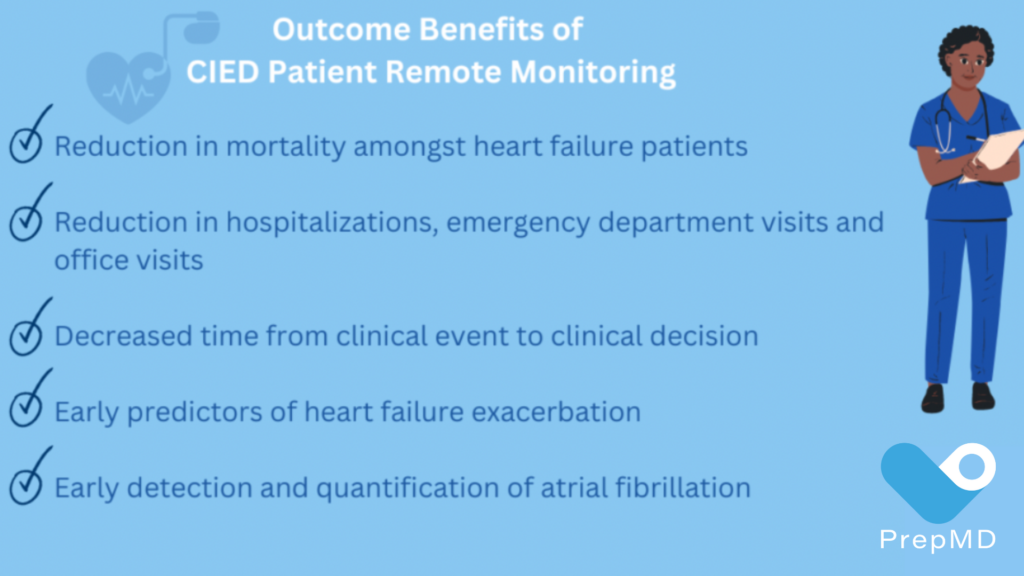
Key factors to examine when considering the outcome benefits for cardiac device patient remote monitoring include:
-Reduction in mortality amongst heart failure patients
-Reduction in hospitalizations, emergency department visits and office visits
-Decreased time from clinical event to clinical decision
-Early predictors of heart failure exacerbation
-Early detection and quantification of atrial fibrillation”

In 2015, as a result of the many outcomes-benefits studies done over the years, the Heart Rhythm Society designated remote monitoring and interrogation as a Class IA recommendation, when combined with at least one annual in-person evaluation. Furthermore, all patients should be offered remote monitoring as part of the follow-up management strategy when technically feasible.

So, what are the costs associated with achieving the clinical outcome advantages of a remote monitoring program? Any program that enhances patient outcomes should garner support when the economics are neutral or positive. However, programs that significantly escalate costs may face challenges in gaining traction, even if they offer patient benefits.

While cost is important, the overall economic picture depends largely on whether the clinical program exists in a fee-for-service or so-called “fee-for-value” environment (managed care, accountable care organizations, etc.)

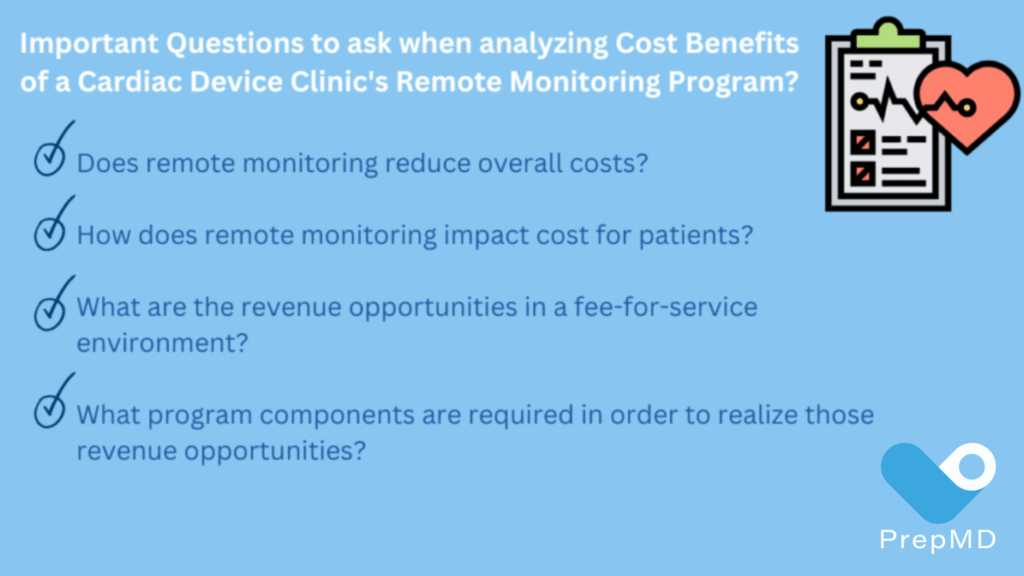
In fee-for-service environments, revenue generation is balanced against cost. In fee-for-value, cost reduction is the primary economic driver, as it can lead to shared savings from payors. Complicating matters is that the long awaited transformation from fee-for-service to fee-for-value is still largely a work in progress, and most organizations are somewhere in the middle with participation in both types of financial arrangements. When addressing remote monitoring, it is important to consider the following questions: 

Device Clinic Cost Benefit Analysis

One way to answer the first question is through formal health economics research, but those studies can be very challenging, especially when trying to decide how much to value studies done abroad or in a different reimbursement or healthcare climate. The TARIFF Study1 is one frequently referenced Italian study published in 2017, which showed that remote monitoring resulted in statistically significant reductions in hospitalizations, emergency visits, outpatient diagnostic tests, and clinical evaluations compared with standard care. The overall mean annual cost per patient in the remote monitoring group was 54% lower than standard care, driven primarily by a lower cost of cardiovascular hospitalizations. This cost reduction is consistent with the hypothesis that earlier identification of clinical or device issues will result in earlier intervention and less complicated hospitalizations. 

Another relevant study published in 2021 in the Canadian Journal of Cardiology2 followed ICDs and CRT-D patients for an average of 50 months. The data showed that remote monitoring was associated with both a lower risk of death and cardiovascular hospitalizations, with cost savings observed over five years of over $12,000 per patient. In summary, while the evidence that remote monitoring lowers overall costs is not as strong as the clinical outcomes evidence, there is little evidence suggesting that costs will be increased. 

“Device Clinic managers can reasonably conclude that implementing a high quality remote monitoring program will result in improved patient care and better clinical outcomes, with a cost-neutral or possible reduction in overall costs to the clinic or hospital,” explained Dr. Lerman

As important as it is to evaluate the economic impact of remote monitoring on the healthcare organization, it is just as critical to consider the impact on individual patients. A 2021 American Journal of Cardiology article3 described how cardiac device patients frequently express concerns over remote monitoring, cost transparency, and billing. 

Kent Seckinger, CCDS, PrepMD Customer Success Director, discussed how to best approach these common patient concerns. “What it really comes down to is patient education and transparency. Educating the device patients is critical to ensuring that they know that there are real benefits for them with remote monitoring. A discussion with each patient should include the specifics of the billing model and relevant regional reimbursement rates, and most importantly, an explanation of the clinical benefits realized with remote monitoring, such as reduction of hospitalizations and ER visits.”

Patients better understand remote monitoring costs when they grasp the clinical rationale and benefits. Without this patient education, patients often call the clinic in frustration when they receive bills that they don’t understand, increasing staff burden. Even worse, they may decide to disconnect their monitors. It is crucial to discuss remote monitoring with the patient and their family members no later than the very first visit immediately after implantation. This ensures that they understand its importance and implications from the outset

Seckinger explained that the PrepMD Clinic Solutions Leadership Team have found that a little patient education goes a long way. “The patient often feels they’ve taken ownership in the management of their care as well. A critical 30-minute discussion on the benefits of remote monitoring with the patient at their first visit will definitely save time in the long run.” 

While the primary motivation to provide remote monitoring services for CIEDs is to provide the highest quality patient care, organizations that participate in fee-for-service environments have an opportunity for increased revenue generation. That is because remote monitoring best practices involve improving patient compliance, which along with a detailed understanding of billing requirements, typically leads to a higher overall volume of billable transmissions. ICD transmissions can typically be billed quarterly, pacemakers every 3-6 months, and ILR and heart failure monitoring can often be billed monthly. This increased transmission volume usually more than compensates for the costs incurred by a third party remote monitoring service if one is utilized. Although there is still a fair amount of regional differences in reimbursement for some remote monitoring services, typically, a well run and legally compliant program is profitable. 

It is important however, to be cognizant of the cost burden of remote monitoring on patients, especially for Implantable Loop Recorders (ILRs) and devices where heart failure monitoring can be performed and billed. In both of these circumstances, Medicare allows billing for 30-day monitoring periods, and while such billing meets regulatory requirements when clinically indicated, patient co-payments can add up quickly, especially in regions with high reimbursement. 

Greg O’Neal, CCDS, CEPS, PrepMD Director of Technology and Business Development discussed the 2015 HRS Expert Consensus Statement4 of remote interrogation and monitoring for cardiovascular implantable electronic devices. The HRS consensus statement described a cadence of regularly scheduled quarterly remote monitoring transmissions for pacemakers and implantable defibrillators (monthly for ILRs and insertable cardiac monitors) with ad hoc in-person evaluations based on device or patient generated alerts plus a single scheduled annual in-person evaluation, all of which can be potentially reimbursable. 

In developing a fee-for-service model, a clinic must be able to optimize the frequency of the remote monitoring transmissions with the appropriate CPT code usage for each device type, including the professional and technical components, while keeping all the patient transmission schedules consistent on each of the vendor websites for all devices. 

Greg O’Neal, PrepMD Director of Product & Business Development explained, “In general, we find that many clinics running remote monitoring programs monitor patients less frequently than optimal. This highlights the discrepancy between the ideal monitoring frequency and the actual practices in clinics. The typical reimbursement is often less than 50% of the optimal.”

Clinics should ensure they use the correct CPT billing codes for monitoring heart failure patients monthly, as this could potentially increase their top-line revenue by 30 to 40%.

In addition to making sure that device transmission schedules are optimized, clinics need to carefully track connectivity and quickly move to restore disconnected monitors and minimize missed transmissions. In-person visits need to be coded properly and remote schedules adjusted if necessary.

Dr. Lerman concluded, “No two clinics are the same and this can make effective clinic remote monitoring management a daunting task. It’s clear that there are opportunities here both on the cost saving side and- if you’re in the appropriate model- on the revenue generation side. However, you can’t just roll out of bed one day and realize both these economic outcome benefits as well as the clinical outcome benefits.”

Clinic managers will find that utilizing these best practice principles will help guide them through the process of implementing and managing an effective remote monitoring program at their clinic:

  • Improving Patient Communication and Education
  • Monitoring and Ensuring Remote Monitoring Scheduling and Compliance
  • Ensuring Appropriate CPT Codes, Billing, and Reimbursement

As far as costs are concerned, device clinics may be able to take advantage of appropriate partnerships to optimize their resources. This may be a combination of training, staffing, remote monitoring software and service in the form of a bundled solution that enables the clinics to manage their costs effectively, enhancing their profitability. By strategically partnering with reliable solution providers such as PrepMD, clinics can ensure they are investing in the most efficient and cost-effective solutions tailored to their specific needs. Such partnerships can help clinics navigate the complexities of budgeting and resource allocation, ultimately leading to greater financial sustainability and success.

Explore companies like PrepMD for comprehensive device clinic solutions and discover how highly experienced and certified professionals can collaborate with your clinic to improve patient care, optimize billing, and manage costs with bundled solutions. Additionally, explore the relevant publications below for further insights.

CITATIONS:

1 Ricci, Renato Pietro, et. al, “Economic analysis of remote monitoring of cardiac implantable electronic devices: results of the health economics evaluation registry for remote follow-up (TARIFF) study,” NIH Comparative Study: Heart Rhythm, 2017 Jan;14(1):50-57. doi: 10.1016/j.hrthm.2016.09.008. Epub 2016 Sep 8,  https://pubmed.ncbi.nlm.nih.gov/27614025/.

2Abramson, Beth L., et. al., “Canadian Cardiovascular Society 2022 Guidelines for Peripheral Arterial Disease,” NIH Practice Guideline: Canadian Journal of Cardiology. 2022 Jun;38(6):736-744. doi: 10.1016/j.cjca.2022.01.022. Epub 2022 Jan 29, https://pubmed.ncbi.nlm.nih.gov/35537813/.

3Fraiche, Ariane M., ”Patient and Provider Perspectives on Remote Monitoring of Pacemakers and Implantable Cardioverter-Defibrillators,” Research Article: American Journal of Cardiology Volume 149, P42-46, June 15, 2021, https://www.ajconline.org/article/S0002-9149(21)00266-6/fulltext.

4Slotwiner, David, MD, et. al. 2015 “HRS Expert Consensus Statement of remote interrogation and monitoring for cardiovascular implantable electronic devices.” Heart Rhythm, volume 12, Issue 7, July 2015, Pages e69-e100, https://www.sciencedirect.com/scie

Clinician in dark blue scrubs at computer

Cardiac Device Remote Transmission Scheduling: Work Smart, Not Hard

“Setting correct intervals, whether manual or automatic scheduling, in Boston Scientific, Medtronic Carelink, and St. Jude/Merlin/Abbott patient profiles can serve as a resource when determining the best dates for upcoming office visit device checks.”

by Amy Harris, PrepMD Lead Patient Outreach Specialist

Amy is part of the PrepMD Clinic Solutions Leadership Team, providing cardiac device remote monitoring software and services to device clinics across the U.S.

Auto-schedules, set to the correct intervals, reduce the risk of scheduling oversight, as well as billing inconsistencies for patients keeping track of their medical balances. 

In addition to billing predictability for patients, scheduling pacemaker and defibrillator remote transmissions at the standard minimum interval of 91 days increases the likelihood of obtaining four remotes per year, per patient.    

Setting intervals to 98 days to allot more time to initiate the billing process results in fewer transmissions each year per patient, and reduces clinic revenue for remote monitoring.

The same result is true for remote schedules which are skipped or “pushed out” for office visit interrogations. Setting correct intervals, whether manual or automatic scheduling, in Boston Scientific, Medtronic Carelink, and St. Jude/Merlin/Abbott patient profiles can serve as a resource when determining the best dates for upcoming office visit device checks. 

Scheduling loop recorder/ICM transmissions each 31 days is the standard minimum, however, intervals of 35 days ensure transmissions arrive on weekdays (for clinics wishing to avoid weekend billing). 

 Medtronic and Boston Scientific require a few
unique steps during the scheduling process

Patient accounts in Carelink with bedside monitors and implanted devices compatible with Smart Scheduling are represented by a symbol . This icon indicates the implanted device is capable of automatic, cycling scheduled transmissions.

The absence of this icon is noted for devices which require patient-initiated manual transmissions, such as with the Advisa, Adapta, Micra, Sensia, Revo, and Versa. 

For Medtronic Carelink, there are different scheduling options and requirements  

Single 

  • Located under the “Schedule” tab, these one-time schedules are used primarily for pacemakers or defibrillators programmed only to manually transmit. Patients are informed of future transmission date(s), and send data independently. 
  • Single, or one-time scheduling may also be utilized for any pacemaker or defibrillator which is capable of Smart Scheduling, but is opted out of automatically recurring transmissions (e.g., Monitoring physician preference, or report data/billing concerns). 
  • In some cases, both Single and Smart schedules can be used, however, it is more efficient to select one option to avoid scheduling overlap or error. 

Series

  • Located under the “Schedule” tab, compatible pacemakers or defibrillators can utilize a Series, or auto-cycled schedule. This method ensures home monitor transmissions are being sent on time, every time, and provides notification when they have failed.
  • The earliest possible transmission date is provided, and custom intervals can be selected.     
  • If a bedside monitor experiences connectivity issues, a Series set to transmit on an interval will automatically place that patient within the “Missed Transmissions”, “No Schedules”, and/or “Disconnected Monitors” category for your review. 

Summary (Loop Recorders)

  • Located under the “Overview” tab, “Summary Reports” are clinical reports generated for LINQ devices. These can be set to a one-time or recurring schedule. 
  • LINQ schedules should not be set under the “Schedule” tab. Whether one-time, or recurring transmissions, a Summary Report cannot be generated unless set up utilizing the tools provided under “Overview”  
  • Note: LINQ schedules created under “Overview”, do not populate the date of the next transmission under the dashboard column labeled, “Next Scheduled Send” (for defibrillators and pacemakers). It instead will read, “Not scheduled”. 

Boston Scientific provides a link at the top right of each dashboard to toggle between “Clarity” for loop recorders, and “NXT” for defibrillator and pacemaker device transmissions.     

Scheduling in Boston Scientific Latitude NXT 

For pacemakers or defibrillators, within each patient profile is an option to “Edit/View Schedule and Alert Configuration”. 

For Latitude NXT, there are different scheduling options and requirements  

  • Schedules can be set as a clinic default (managed in clinic settings)
  • Or customized with automatically recurring intervals 
  • Select the next scheduled remote follow up date in blue to view the calendar, and ensure the weekday is matched with the “Day of the Week” dropdown. 
  • NXT provides the option to change or set remote transmission schedules either directly from the dashboard, or within “Schedule and Alert Configuration”. 

If electing to set or edit the next transmision date on the dashboard, the date must fall on the same weekday specified under “Schedule and Alert Configuration”, or else the transmission may be “missed” as a result of the date contradiction.

As a method of efficiency, all schedule editing should be carried out under “Schedule and Alert Configuration”

Scheduling in Clarity

Access Clarity using the top right toggle link 

  • Select patient to view profile. 
  • The next scheduled date can be selected from the calendar without an associated weekday dropdown.  
PrepMD Mock Cath Lab Training

Training ROI and Continuing Education in Cardiac Medical Devices

The learning curve is steep in the cardiac medical device space with effective training programs a necessity. Innovation and advancements in medical devices is constant. The professionals working in the cardiac medical device space rely on  clinical and corporate training solutions to ensure proficiency and safe patient outcomes.

Collaboration: Improving Training ROI

Medical device companies and cardiac clinical staff realize a higher return on their investment by embedding employee input and collaboration in the process. To ensure best outcomes and return on training investment, a customized training solution should include thoughtful input from all levels and include training needs assessment to ensure efficacy. Employers who invest in this collaborative approach to a well-trained staff will see better technical and clinical results along with higher morale and job satisfaction.

Clinical Competence: Higher Standard of Care

Any cardiac clinic nurse manager asked will have much to say about the common clinic challenges of an undertrained device clinic staff and continuing education requirements. The cardiac device space is complex with fast changing technologies and products. Hospitals and clinics rely on PrepMD for a variety of our services, including healthcare training, clinic staffing, and remote monitoring services. While there are many positive training outcomes, the priority at PrepMD is to help our clients have more competent staff better equipped to provide a higher standard of performance and patient care.

Building Competent Teams to keep up with Innovation

Nowhere is the importance of clinical and technical competence more apparent than in cardiology and the medical device industry, where new products and innovative therapies are constant!  Effective recruitment and retention of a talented team is expensive and time-consuming, and critical to successful patient outcomes. Training is an essential ingredient to building and keeping competent teams who have not only the clinical acumen but also the motivation to keep abreast of the constant stream of new cardiovascular products and therapies.

The importance of Retention

Staff turnover may be one of the biggest pain points for any manager, but especially so in the cardiac space. The importance of new hires and initial training is obvious, but continuing education and coaching of the workforce is where management begins to reap the rewards of staff retention with a competent, satisfied, and well-trained staff. The one-and-done style training investment is not effective for this highly clinical and technical space. An effective training program, positive work culture, and low turnover help contribute to a positive reputation as an employer.

Male doctor smiling with patient

The Advantages of Outsourcing Remote Monitoring and Contract Staffing: Boosting Efficiency and Patient Outcomes

In today’s rapidly evolving healthcare landscape, cardiac device clinics face the challenge of hiring and retaining expert clinical and technical staff who can deliver optimal patient care while improving operational efficiency. The 2023 HRS/EHRA/APHRS/LAHRS expert consensus guidelines emphasize the need for 3 full-time clinical staff members per 1,000 CIED patients to meet the current standard of remote monitoring care. This article explores the significance and influence of highly trained staff in device clinics and introduces an innovative approach that combines outsourcing of both remote monitoring services and contract staffing. Understanding the economic and clinical advantages of outsourcing remote monitoring and utilizing contract staffing helps healthcare providers enhance practice efficiency, financial stability, and reduce the strain of high turnover, ultimately resulting in better patient outcomes. By combining these two strategies, clinics can reap the following benefits:

Cost Savings: Outsourcing remote monitoring services and contract staffing provides significant cost savings compared to in-house monitoring and staffing. Partnering with a specialized remote monitoring service provider and contract staffing organization like PrepMD allows clinics to avoid expenses related to hiring, training, infrastructure investments, and technical support systems.

Expertise and Efficiency: A highly trained and qualified remote monitoring service provider possesses the necessary expertise, experience, and resources to manage and analyze device data effectively. Their specialized knowledge enables efficient data interpretation, timely patient follow-ups, and proactive interventions, leading to optimized patient care and better outcomes. Contract staffing provides access to highly trained professionals, alleviating the burden of recruitment and training for device clinics.

Risk Mitigation: Outsourcing remote monitoring and contract staffing shifts the responsibilities of data management and analysis to specialized providers. This reduces the risk of errors or oversights that could result in adverse events or missed critical patient information. Clinics can leverage the expertise of remote monitoring service providers and contract staff to mitigate risks and improve patient safety.

Financial Transformation through Strategic Partnership: Maximizing Revenue and Enhancing Remote Monitoring Efficiency (A Case Study)

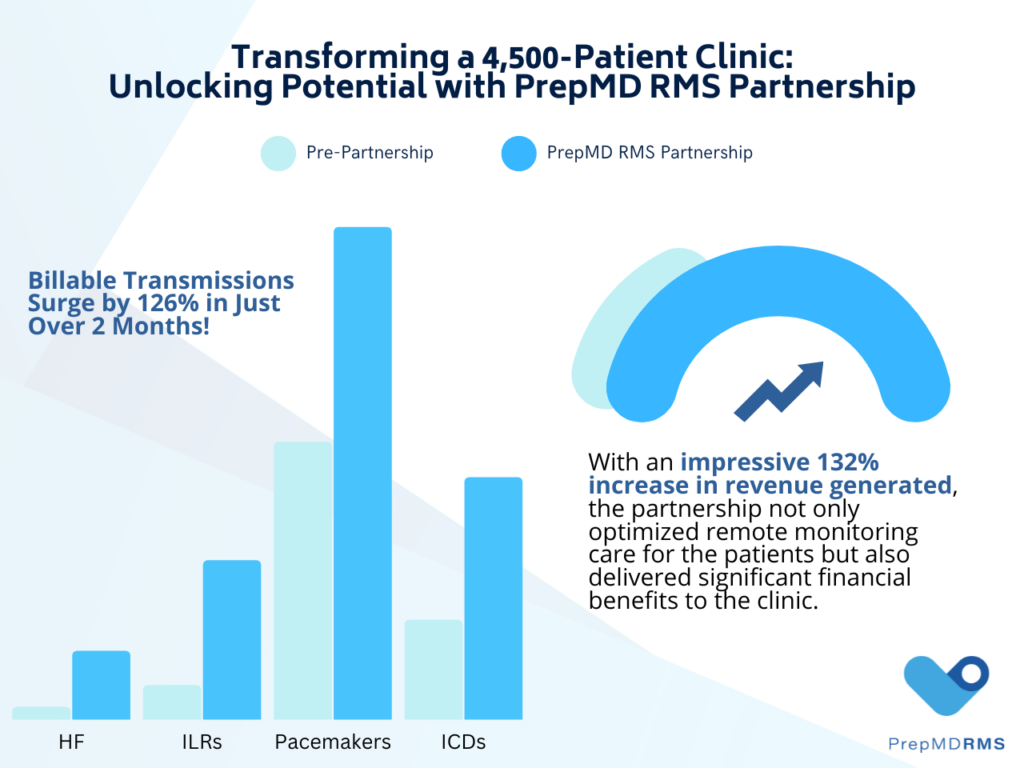
Let’s explore the impact of partnering with PrepMD on a 4,500 patient cardiology clinic to showcase the financial and clinical benefits of outsourcing remote monitoring to leading clinical solutions providers. Prior to the collaboration, the clinic faced resource constraints and struggled with a high volume of transmissions, which hindered their financial performance and remote monitoring operations. 

Over a 2-month period, the clinic observed a remarkable transformation. The number of billable transmissions increased by 126%, resulting in a significant 132% rise in generated revenue.

Here is a breakdown of the increase in billable transmissions for specific device types:

  • Heart Failure (HF): 435% increase in billable transmissions.
  • Implantable Loop Recorder (ILR): 361% increase in billable transmissions.
  • Pacemaker (PM): 77% increase in billable transmissions.
  • Implantable Cardioverter Defibrillator (ICD): 143% increase in billable transmissions.

By partnering with the PrepMD Clinic Solutions Leadership Team, the clinic achieved remarkable financial improvements. The increased billable transmissions and revenue growth during the 2-month partnership period demonstrate the effectiveness of the collaboration. The financial gains realized through this partnership highlight the positive impact of leveraging PrepMD RMS services on both the clinic’s financial performance and patient care.

Addressing Staffing and Remote Monitoring Needs:

Partnering with leading cardiac clinical solutions companies which offer bundled contract staffing and remote monitoring service offerings, enables clinics to address their staffing needs economically and effectively. Clinics can retain staff by implementing 1-year or 2-year clinical staffing agreements providing stability, overcoming high turnover rates, and reducing recruitment and training costs. Longer-term commitments foster a supportive work environment, enhance team cohesion, and optimize patient care delivery.

To address the burden of remote monitoring, clinics can partner with PrepMD for premier remote monitoring services that offer a dedicated team of full-time IBHRE-certified professionals that can seamlessly integrate into their workflows. This collaborative approach allows clinics to become self-sufficient while significantly reducing costs, optimizing billing and revenue, and delivering the highest standard of care to their patients with CIEDs.

Conclusion:

Staffing plays a crucial role in cardiac device clinics for remote monitoring, ensuring optimal patient care and streamlined operations. By adopting an innovative and paradigm shifting approach to CIED clinic management that combines outsourcing of remote monitoring services and contract staffing, clinics can achieve enhanced efficiency, financial stability, and improved patient outcomes. The expertise of specialized providers and the utilization of contract staff empower clinics to focus on direct patient care, in-person device checks, and optimizing clinic operations while maintaining the highest standards of care.