Tag: Cardiac Device Patients

Heart Failure Monitoring: Challenges, Best Practices, and Workflow Solutions for Clinics

Heart failure (HF) monitoring plays a critical role in delivering proactive, patient-centered care—but only when integrated into clinic workflows with the right tools and team coordination. Despite availability, a 2023 review noted fewer than 30% of eligible patients benefit from CRT-based HF diagnostics—due largely to workflow limitations and operational silos. 

Many cardiac device clinics hesitate to fully leverage HF diagnostics from CRT devices due to complexities in routing, cadence management, and coordination between care teams. The result? Missed opportunities for early intervention, increased provider burden, and inconsistent patient outcomes.

At the core of this issue is a simple but important reality: CRT devices—while a type of cardiac implantable electronic device (CIED)—report both HF and arrhythmia data, yet the workflows and systems supporting clinical teams aren’t always designed to accommodate that dual functionality efficiently.


I. Key Challenges in Implementing Heart Failure Monitoring Workflows

One Device, Separate Teams

While CRT devices generate both HF and arrhythmia diagnostics, those data streams need to be assigned to separate clinical teams—electrophysiology (EP) and heart failure (HF)—in a unified workflow. This misalignment can lead to confusion, redundancy, and critical information slipping through the cracks.

Monitoring Cadence Mismatches Increase Risk

EP reports typically follow a 91-day cadence, while HF monitoring often requires a 31-day rhythm. Yet these diagnostics are combined in a single stream. Manually parsing out what needs to be reviewed and when can be burdensome, and risks allowing clinically relevant HF data to go unreviewed—sometimes for weeks.

Workflow & Billing Confusion

Accurate team routing and billing depends on clean data segmentation—but most clinics lack the built-in infrastructure to support this. Without a streamlined process, many teams face administrative overload and compliance risks.

Rigid Systems, Limited Options

Without flexible software, clinics are left without solutions to customize HF monitoring from CRT devices. Ultimately, clinics need configurable workflows and the ability to intensify monitoring when HF risk increases—without disrupting CIED data flow for other device patients.


II. PrepMD OMNI: Purpose-Built for Coordinated CIED Monitoring

PrepMD OMNI was designed to help clinics navigate these challenges—not with a one-size-fits-all model, but with intelligent, clinician-driven workflows that adapt to your team’s, and patients’ real-world needs.

Flexible Monitoring Cadence

PrepMD OMNI enables clinicians to start with a standard 91-day cadence, with the ability to shift individual patients to a 31-day schedule when HF concerns arise—and just as easily de-escalate when stability returns—improving response times and aligning with best practices in heart failure care. This dynamic flexibility supports precision care without overextending resources.

Smart Report Routing

PrepMD OMNI’s automated report assignment tools ensure diagnostics go to the right hands:

  • EP data is routed to EP teams
  • HF data goes to HF teams
  • Both teams retain shared access for full transparency and collaboration when needed. This eliminates duplication while supporting multidisciplinary care.
  • The system allows for separate and independent documentation for each care path.

Collaborative Case Management

PrepMD OMNI supports shared case ownership—allowing HF and EP teams to work from a unified profile, with role-based actions and visibility. This bridges the gap between specialties and fosters a more integrated approach to care.

Built-in Billing Logic

With OMNI Care Cycles, clinics do not need to manually track billing intervals. Care Cycles are set up to:

  • Track all patient activity on a rolling basis
  • Ensure billing intervals are satisfied
  • Track upcoming service dates & identify overdue service dates

This ensures billing compliance for both HF and arrhythmia monitoring, even when they stem from the same CIED.


III. What It Means for Patients

By solving operational and billing complexities, PrepMD OMNI helps your team spend more of their time on patient care. That includes:

  • Timely escalation or de-escalation of care
  • Coordinated action from both HF and EP teams
  • Individualized monitoring for each patient
  • Greater patient confidence in their care journey

These desirable outcomes align with the latest ACC/AHA guidelines on heart failure management—emphasizing timely, team-based, and individualized monitoring practices.


IV. A Consultative Note to Clinicians

The 2023 HRS Expert Consensus Statement makes it clear: CIED-based remote monitoring should be collaborative, dynamic, and patient-specific. Here at PrepMD, we understand how difficult that is without the right tools in place.

PrepMD OMNI was built to address this challenge—helping your team coordinate across specialties, adjusting monitoring as patients’ needs change, and staying aligned with billing rules—all without increasing your administrative burden.

HF monitoring doesn’t have to be risky or inconsistent. With PrepMD OMNI, it becomes a structured, adaptable, and clinically sound part of your CIED workflow—empowering you to do what you do best: care for your patients.


Frequently Asked Questions (FAQ)

What is the ideal cadence for heart failure remote monitoring?

While many clinics default to a 91-day monitoring cadence—often tied to standard device follow-up workflows—a 31-day cadence is more appropriate when patients show signs of heart failure (HF) decompensation. This more frequent review supports timely clinical intervention and aligns with best practices in HF care.

How can clinics overcome workflow challenges in CIED-based HF monitoring?

Adopting flexible tools like PrepMD OMNI allows teams to assign data efficiently, automate cadence changes, and reduce administrative load.

What features support billing and documentation in HF monitoring systems?

Built-in billing logic, automated interval tracking, and team-specific HF documentation offered by advanced platforms like PrepMD OMNI help reduce missed revenue opportunities and ensure compliance.


References

  1. Heidenreich PA, et al. “2022 AHA/ACC/HFSA Guideline for the Management of Heart Failure.” Journal of the American College of Cardiology, 2022.
  2. Singh JP, Varma N. “Device-Based Monitoring of Heart Failure: Evolution of a Clinical Paradigm.” Arrhythmia & Electrophysiology Review, April 24, 2023.
  3. Ferrick A, et al. “HRS Expert Consensus Statement on Remote Monitoring of Cardiac Implantable Electronic Devices.” Heart Rhythm Society, 2023.

The Ultimate Guide to Choosing Device Clinic Training Programs

The success of cardiac device clinics depends heavily on the expertise and skills of their staff. Whether onboarding new employees or enhancing the proficiency of experienced team members, selecting the right training program is essential. With the growing demand for cardiac device expertise, clinic managers must prioritize training solutions that provide a strong foundational understanding while equipping teams to adapt to technological advancements and deliver exceptional patient care.

Effective training programs equip staff with the confidence and skills to handle complex clinical scenarios and meet patients’ needs with precision and efficiency. Without proper training, clinics risk increased errors, reduced patient satisfaction due to inefficiencies, and lower staff morale and retention. Investing in high-quality training not only enhances daily operations but also lays the foundation for long-term success, excellence in patient care, and improved financial outcomes for clinics.

What to Look for in a Cardiac Device Clinic Training Program

  1. Comprehensive Curriculum

A well-rounded, up-to-date curriculum is essential for both new and experienced staff. While new hires need a clear starting point to build their expertise, experienced employees can greatly benefit from revisiting and reinforcing foundational concepts. 

An effective training program should encompass:

  • Core topics, including cardiac anatomy, physiology, rhythm analysis, and therapies such as Brady, Tachy, and CRT.
  • Advanced concepts, practical applications, and simulation-based learning, focusing on device operation, troubleshooting, and monitoring.

By blending foundational knowledge with practical application, a comprehensive curriculum equips your team to excel in the ever-evolving field of cardiac device management.

  1. Onboarding and Upskilling Made Easy

The onboarding process sets the foundation for a new hire’s success. A strong onboarding process integrates a high-quality technical training program designed to:

  • Seamlessly integrate new staff into your clinic’s workflows.
  • Minimize errors through structured and effective learning paths.
  • Build confidence and competence in handling cardiac device programming and monitoring.

Equally important is the upskilling of existing staff. Training programs that address skill gaps and incorporate best technical practices ensure experienced employees remain competitive, adaptable, and equipped to handle the latest cardiac device technologies. Training programs that offer preparation practice tests also enable experienced staff to take their expertise to the next level by earning credentials such as IBHRE CCDS or CDRMS.

  1. Flexible Learning Formats

Flexibility is essential when selecting a training program, as each clinic’s needs are unique. Equally important is evaluating the quality of the training to ensure it meets industry standards. Look for programs that deliver high-quality content with flexible options, such as:

  • Online, Self-Paced Modules: Perfect for clinics with demanding schedules, allowing staff to learn at their own pace without sacrificing quality. Programs that use a multi-modal approach – such as animations, knowledge checks, and simulations – boost engagement and help ensure successful course completion.
  • Virtual Support: Includes features like live webinars and office hours, providing expert guidance while allowing staff to remain in the clinic during training.
  • Hybrid Options: Combines online and in-person training, offering hands-on practical experience in conjunction with conceptual learning.

These flexible, high-quality approaches ensure that training seamlessly integrates into your clinic’s operations, enabling staff to enhance their skills while maintaining patient care.

  1. Performance Tracking and Accountability

To gauge the success of your training efforts, programs should include tools for tracking progress and performance. These features might include:

  • Regular knowledge checks, assessments and quizzes to evaluate understanding.
  • Progress reports for managers to monitor individual and team progress.
  • Feedback mechanisms to identify areas for improvement at the end of the training.

By measuring outcomes subjectively as well as objectively, you can continuously refine your training efforts to achieve better results.

  1. CEU Accreditation for Professional Development

Continuing Education Unit (CEU) accreditation is a hallmark of a high-quality training program. CEU-accredited programs offer:

  • Recognition of professional development efforts, while potentially assuring standardized, high-quality training.
  • Enhanced employee motivation, as staff see tangible career benefits.

Selecting a CEU-accredited program not only boosts your clinic’s credibility but also ensures your team is equipped with industry-recognized skills.

Choosing a training program, such as PrepMD Accelerator, is essential for the success of your cardiac device clinic. High-quality training equips staff with the skills and confidence to tackle today’s challenges while staying ahead in a rapidly advancing field. The ideal program features a comprehensive curriculum, flexible learning formats, performance tracking, and CEU accreditation to meet industry standards and clinic-specific needs. Partnering with a provider like PrepMD, with a proven track record of delivering successful training and driving results for major healthcare systems, ensures you’re investing in excellence. By doing so, you can enhance operations, foster professional growth, increase retention, and elevate patient care.

Navigating Change: Why PrepMD OMNI is the Ultimate Solution for Clinics Transitioning from Paceart

In the evolving landscape of remote monitoring, cardiac device clinics have a unique opportunity to reassess their core operational challenges and seek comprehensive solutions that address their needs holistically. Historically, clinics often focused on data management in isolation, hoping to resolve broader issues. However, clinics continue to face significant personnel challenges, including the current staffing crisis and the need to onboard and upskill existing staff. With recent changes in the remote monitoring space, including the Paceart acquisition, clinics now have the chance to step back, reevaluate, and adopt an integrated approach to enhance patient care and streamline efficiency.

PrepMD OMNI emerges as the only comprehensive solution tailored to meet the evolving needs of clinics, including those migrating from Paceart. It enables clinics to take complete control of their operations, driving both clinical and economic efficiency, while ensuring seamless data transfer and providing access to CareSync — one of the most critical functionalities previously offered by Paceart’s SessionSync.

The Power of PrepMD OMNI: A Superior Paceart Alternative

PrepMD OMNI is much more than just a data management platform—it’s a fully integrated suite of services that empowers clinics to deliver exceptional patient care while optimizing operational efficiency. Here’s why OMNI is the preferred choice for clinics navigating the changes in the cardiac device management landscape:

  • Comprehensive Clinic Management: OMNI offers a robust set of tools including on-demand in-clinic staffing, expert IBHRE-certified remote monitoring services, and extensive online device management training. These resources ensure clinics have the support needed to maintain high standards of care throughout the entire device clinic lifecycle.
  • Seamless Data Migration from Paceart: Transitioning from Paceart is made effortless with OMNI’s secure and efficient data migration services. Our team ensures patient data is transferred with integrity and compliance, minimizing disruptions and maintaining continuity of care.
  • EHR Integration for Enhanced Efficiency: OMNI’s seamless integration with existing EHR systems ensures streamlined data flow and enhanced patient care. This interoperability is crucial for clinics looking to maintain efficient workflows and comprehensive patient records.
  • Wireless In-Clinic Data Transfer with CareSync: For clinics that previously relied on Paceart’s SessionSync for in-clinic data transfer from Medtronic SmartSync, PrepMD OMNI now includes CareSync—a built-in wireless transfer feature that seamlessly delivers reports and maintains uninterrupted clinic workflow efficiency.

Why Choose PrepMD OMNI as an Upgrade from Paceart?

Amid the current shifts in the industry, PrepMD stands out as a trusted partner, known for its deep relationships not only with world-renowned healthcare systems but also with leading vendors like Medtronic—the former owner of Paceart—as well as Abbott Labs, Boston Scientific, and Biotronik. These partnerships highlight our comprehensive expertise across all specialties within the cardiac space, reflecting our commitment to delivering innovative and effective solutions.

Upgrading to PrepMD OMNI provides clinics with access to a clinician-developed software suite that is designed with a deep understanding of each clinic’s unique needs. OMNI is not only comprehensive and backed by years of clinical expertise but also highly customizable and intuitive, ensuring a seamless onboarding process with minimal training time. This empowers clinics to quickly integrate the software suite, benefiting from advanced solutions and dedicated support that position them for long-term success in the evolving cardiac device management landscape.

As the cardiac device management landscape evolves, clinics need a partner that offers stability, innovation, and comprehensive support. PrepMD OMNI is uniquely positioned to provide this, making it the ideal choice for Paceart customers seeking a seamless transition and continued excellence in patient care. Contact us today to learn more about how PrepMD OMNI can support your clinic’s success.

The Evolving Role of Cardiac Device Clinic Software

Transforming Cardiac Device Clinic Software: Beyond Data Management to Comprehensive Clinic Solutions

As the healthcare landscape evolves, so too must the tools we use to manage it. Cardiac device clinics today face numerous challenges in optimally running their operations. While cardiac middleware solutions can streamline workflows, addressing foundational issues like the lack of clinical staffing and training resources is crucial for comprehensive device clinic operations. Today’s technology has the ability to provide tools for easy communication, on-demand learning, and recruiting that go beyond data management. This blog explores a comprehensive suite that enhances clinic operations, addressing these core challenges with cutting-edge tools. A holistic approach in device clinic management software can revolutionize operations, improving efficiency, patient care, and overall performance. 

Broader Needs of Device Clinics:
Device clinics face a range of challenges beyond data management: These challenges are often on-going, cyclical in nature, and need to be addressed in a timely fashion in order for clinics to maintain efficiency, exceptional patient care, and prevent staff burnout. 

  • Device Clinic Staffing: High turnover rates have been a challenge for all clinic managers. Once trained staff move on to a new career, or go on extended leave, the time to source and train new staff to be self-sufficient can often exceed more than a year. A complete cardiac device clinic software should provide embedded access to a pool of contract staff, specializing in device management.
  • Remote Patient Monitoring: When clinics are short-staffed, keeping up with daily transmissions, triaging alerts, and processing reimbursable reports becomes increasingly challenging, leading to suboptimal patient care, greater risk of liability, missed reimbursable revenue, and burnout for existing staff. A complete cardiac device clinic software should provide embedded access to professional, on-demand remote monitoring services to minimize and even eliminate these challenges during times of being short staffed. 
  • Onboarding and Continuous Training: Keeping staff up-to-date with the latest practices and technologies is essential for delivering optimal patient care. Device clinics require a thorough clinical training solution to onboard new staff, assess their skills, and upskill existing clinical staff. A complete cardiac device clinic software should provide embedded access to a robust online training platform. This enables clinic leaders to customize training to meet their clinical team’s needs, offering tailored training based on individual requirements, IBHRE certification preparation, and interactive content specific to the daily operations of a cardiac device clinic.

In conclusion, the evolving role of cardiac device clinic software extends beyond mere data management to address the comprehensive needs of clinics. By incorporating solutions for staffing, remote patient monitoring, and continuous training, these software suites can significantly enhance clinic operations. A holistic approach to clinic management software not only improves efficiency and patient care but also supports the well-being and satisfaction of healthcare professionals.

In our upcoming blog posts, we will delve deeper into each of these critical areas. We’ll explore innovative solutions for device clinic staffing, detailing how integrated contract staffing can seamlessly fill gaps and maintain clinic operations without interruption. We’ll discuss the benefits and implementation of robust on-demand remote monitoring services that ensure continuous, high-quality patient care even during staffing shortages. Additionally, we’ll highlight the importance of continuous training and how cutting-edge online platforms can keep your staff proficient and up-to-date with the latest advancements in cardiac device clinic management.

The Current Perception of Cardiac Device Management Software in Device Clinics

In the realm of cardiac care, the role of device management software has become increasingly prominent. As clinics and healthcare providers strive to optimize patient outcomes, the reliance on technological solutions has grown. However, the current perception of device management software, primarily seen as a data-centric tool, may be limiting its potential. This blog seeks to explore how the market views device management software and to argue for a broader, more integrated approach in clinic operations.

The Conventional View of Device Management Software

Traditionally, device management software has been perceived primarily as a tool for managing the vast amounts of data generated by cardiac implantable electronic devices (CIEDs). This includes consolidating multiple vendor site transmissions, tracking patient device interactions, storing historical data, and facilitating routine checks. The prevailing view in the market has been to evaluate these tools based on their ability to handle and store data efficiently. With the proliferation of advanced technologies, this perception has led to a focus on features like being cloud-based, reducing clicks, centralized, and secure. While these are undoubtedly important, this narrow focus often overlooks the software’s potential to play a more expansive role in clinic management.

The Limitations of a Data-Only Approach

As essential as efficient data management is, focusing solely on this aspect does not address all the operational challenges faced by cardiac clinics. Cycles of high staff turnover, complex training requirements, and the increasing burden of remote monitoring during these cycles are just a few examples of the operational complexities that go beyond mere data handling. For instance, when clinics face staff shortages, a data management tool alone cannot solve the underlying issue of quickly onboarding new staff. Nor can it provide the specialized training required to manage the sophisticated needs of modern CIEDs effectively. Additionally, as remote monitoring becomes more prevalent, the sheer volume of data can overwhelm even the most robust data-centric systems, leading to delays and potential lapses in patient care.

The Need for an Integrated Approach

It’s time to rethink device management software. Beyond just managing data, imagine a solution that transforms the entire operational landscape of the CIED clinics. An integrated approach could dramatically enhance clinic functionality and efficiency.

Imagine a system that not only handles data but also seamlessly improves other key aspects of clinic operations, boosting both staff performance and patient care. The future of device management software involves broadening its scope to meet the evolving demands of cardiac care, ensuring that clinics not only manage their data but also optimize their overall operations. This is the future we envision—one where technology fully supports the complex needs of modern device clinic environments.

Recognizing these gaps, it becomes apparent that device management software should be re-envisioned to encompass more than just data handling. An integrated approach that combines data management with solutions for sourcing qualified staffing, training, and on-demand remote monitoring could transform the operational dynamics of cardiac clinics.

This approach would not only manage data efficiently but also enhance the overall functionality of clinics by:

  • Providing dynamic staffing solutions that adapt to clinic needs in real-time.
  • Offering built-in, up-to-date, CEU-accredited training modules directly within the software, ensuring all team members are proficient and current in their knowledge.
  • Integrating on-demand advanced remote monitoring tools, and experts that can intelligently flag issues and prioritize patient alerts based on risk assessment, thereby improving patient care and staff efficiency.

In conclusion, the current market perception of device management software as primarily a data repository is a narrow view that fails to leverage the full capabilities of modern technology. As the landscape of cardiac care evolves, so too must the tools we rely on. By expanding the role of device management software to include comprehensive clinic management functionalities, we can ensure that clinics are not only managing data but are also optimizing their operations and enhancing patient care.

Contact PrepMD today to learn more about our solutions and comprehensive approach.

AI in Cardiology, technology and healthcare

AI in Cardiology: A Tool, Not a Replacement

In the dynamic landscape of healthcare, Artificial Intelligence (AI) is emerging as a potential ally. For stakeholders in hospitals and clinics grappling with large volumes of data, AI presents an opportunity to enhance efficiency. This is particularly relevant in cardiology, where AI can assist in areas such as Electrophysiology and rhythm analysis.

AI and Cardiology: An Adjunct, Not a Substitute

AI’s role in cardiology is not to replace human expertise but to augment it, especially in the realm of implantable devices like Implantable Cardioverter Defibrillators (ICDs), Pacemakers, and Implantable Loop Recorders (ILRs). These devices generate a wealth of data that can be overwhelming. AI can help manage this data, identifying patterns and anomalies that might be overlooked due to the sheer volume of information.

One of the key applications of AI in Cardiac Implantable Electronic Devices (CIED) practice is reducing false positives. By doing so, AI can help manage data overload without missing genuine positive findings. This can make the process of rhythm analysis more efficient, but it does not eliminate the need for expert human analysis.

LLM, ML, and DL: The AI Trio

Understanding how AI works in this context requires differentiating between Large Language Models (LLM), Machine Learning (ML), and Deep Learning (DL).

LLMs are AI models trained on a vast amount of text data. They can generate human-like text based on the input they receive. In cardiology, LLMs could be used to interpret patient data and generate reports, but these would still need to be reviewed and validated by healthcare professionals. LLMs are particularly useful in processing and understanding natural language, making them ideal for tasks such as reading patient histories or interpreting doctor’s notes.

ML is a subset of AI that uses statistical methods to enable machines to improve with experience. In cardiology, ML could be used to predict patient outcomes based on historical data, but these predictions would need to be evaluated in the context of each individual patient by a healthcare professional. ML algorithms can learn from data and make predictions or decisions without being explicitly programmed to perform the task. This makes them useful for tasks such as identifying patterns in heart rhythms or predicting the likelihood of a cardiac event based on patient data.

DL is a subset of ML that uses neural networks with many layers. DL can be used in cardiology to analyze complex data from imaging or ECGs, for example, but the interpretation and final decision-making should still lie with healthcare professionals. DL models are capable of learning from unstructured data and can identify complex patterns, making them ideal for tasks such as interpreting cardiac imaging data or detecting anomalies in ECG readings.

The Future of AI in Cardiology: A Balanced View

While AI holds promise for the future of cardiology, it’s crucial to remember that it’s a tool, not a replacement for human expertise. The development of AI is ongoing, and while it can assist in data analysis and decision-making, it cannot replace the need for human validation. The best patient outcomes are achieved when AI is used as a tool to assist healthcare professionals, not replace them.

In conclusion, AI can be a valuable asset in cardiology, but it’s not a magic bullet. As we explore this exciting frontier, it’s essential to remember the irreplaceable value of human expertise and validation. AI can be a powerful tool in our arsenal, but like all tools, it must be used wisely and responsibly, always in conjunction with human insight.

It’s important to partner with a company like PrepMD that not only delivers experts in the field of rhythm analysis, but also is actively building a software platform with strategic consideration and a focus on better patient outcomes.

Future of cardiac healthcare

Navigating the Future of Remote Monitoring Clinics – Insights from the 2023 HRS/EHRA/APHRS/LAHRS Expert Consensus

If you’re involved in a Cardiac Implantable Electronic Devices (CIEDs) clinic or you’re a stakeholder in the broader healthcare ecosystem, you’ve likely come across the “2023 HRS/EHRA/APHRS/LAHRS Expert Consensus Statement on Practical Management of the Remote Device Clinic“. This important document offers insightful management strategies for remote device clinics, raising key challenges and valuable recommendations.

Digital Transformation: Handling Data in the New Era

The sheer volume of data generated by CIEDs demands a more streamlined approach to handling, reviewing, and presenting this data. The paper calls for universally accepted data element definitions and exchange formats. These would enable a more efficient data transfer process, thereby reducing time-consuming manual tasks. One solution can be integrating device data via a vendor agnostic device management software platform such as the one offered by PrepMD into the hospital information system, seeing it as an extension of a patient’s file.

The Power of Patient Education

Education is key. Informing patients about their devices and the remote monitoring process enhances their understanding and adherence to monitoring. This should ideally start before the device implantation, covering device function, alert management, and ongoing connectivity maintenance. To enhance patient education in remote monitoring, PrepMD suggests providing patients with informative written documentation or FAQs during their wound check appointment. This helps ensure that patients receive comprehensive information about the remote monitoring process.

Clinic-specific Policies and Third-party Resources

Clearly defined, clinic-specific policies provide structure and transparency. Patients should know the operational hours, remote scheduling, billing details, and the importance of maintaining connectivity and follow-up.

Third-party resources are increasingly becoming essential to meet care standards efficiently. But it’s crucial to be mindful of potential risks, including cybersecurity, data privacy, and financial implications. As a company offering comprehensive services for CIED device clinics, PrepMD ensures that its clinic solutions team are well-versed in device management. This expertise plays a crucial role in mitigating these risks effectively.

Embracing Technological Innovations

App-based software and vendor-neutral CIED management software can be game changers. They can help patients understand their device functions better, manage alerts, and save staff time needed for device checks, freeing up time for more patient-focused tasks. PrepMD RMS highly encourages the use of clinician-developed technologies that are user-friendly and tailored to meet the specific needs of clinics. These technologies are designed to simplify data management, avoiding unnecessary complications that can arise from underutilized features.

Outsourcing to Third-Party Resources: A Practical Solution

Outsourcing to third-party resources can alleviate administrative burdens, manage high-volume data, and improve communication between providers and patients. By collaborating with a specialized company like PrepMD RMS, clinics can not only deliver optimal patient care but also prioritize data privacy and maintain a positive patient perception. Such partnership ensures that all aspects of patient well-being are at the forefront of clinic operations.

Rethinking Staffing and Infrastructure for Remote Monitoring

The consensus statement emphasizes the importance of a dedicated, trained team to manage remote monitoring transmissions. A team-based organizational model is critical for handling the increasing workload. Staff-to-patient ratios should reflect this, and a minimum of 3.0 full-time equivalents per 1000 patients on RM is suggested, comprising both clinical and administrative staff. PrepMD RMS suggests that clinics explore the option of partnering with a renowned clinical solutions company to enhance their clinic’s staffing or provide industry-standard clinic training to their current staff. This collaborative effort guarantees the delivery of exceptional remote monitoring care to patients.

What Does This Mean for Your Clinic?

If you’re managing a remote monitoring clinic, consider implementing these practical recommendations:

1. Regular, individualized patient and caregiver education.

2. Appropriate staffing with clearly defined roles and responsibilities.

3. Ongoing training and certification of clinical staff.

4. Use of specific programming alerts and prompt response mechanisms.

5. Secure and confidential communication of RM device results.

6. A strong relationship with industry for staff training and patient services.

7. Utilizing qualified third-party resources for managing increased device clinic volume.

8. An emergency management plan for device problems.

9. Patient education on clinic-specific policies.

10. Timely response to high-priority alerts.

11. Incorporation of device reports into electronic health records.

The 2023 HRS/EHRA/APHRS/LAHRS Expert Consensus Statement lays out the road map for the future of remote monitoring clinics. It highlights the importance of a standardized organizational model, dedicated teams, and efficient third-party service providers.

With a partnership with a premier cardiac clinical solutions company such as PrepMD, your clinic can not only manage the increasing workload but also achieve optimal care for your patients. By focusing on patient education, streamlining data management, and leveraging modern technology, we can help navigate the complexities of this digital health era. At PrepMD, we understand the changing landscape of remote monitoring and offer customized training, contract staffing, cloud-based software and expert remote monitoring services designed to meet these evolving needs.

Looking Ahead: The Future of Remote Monitoring Clinics

As the CIED patient population grows and technology evolves, the challenge to maintain high-quality care is significant. However, the future looks promising. Incorporating the strategies from the expert consensus, such as outsourcing to third-party resources and ensuring robust patient education, can drive your clinic towards more efficient and patient-centered care.

In conclusion, the key to unlocking the potential of remote monitoring lies in embracing technology, prioritizing patient education, and leveraging third-party resources. These guidelines from the expert consensus pave the way for the successful navigation of remote device clinics. As a trusted third-party service provider, PrepMD is here to partner with your clinic to adapt and thrive in this rapidly evolving field.

Team of clinicians at meeting

Determining Your Device Clinic’s Alert Management Protocols

Rob Lerman, MD, CMO and Kent Seckinger, CCDS, Customer Success Director, PrepMD Clinic Solutions Leadership Team


Management of clinical alerts is unquestionably one of the most challenging tasks for remote monitoring programs. Optimizing alerts saves staff time and focuses energy on clinically relevant issues. Customizing alerts addresses the variations in care that are seen between clinicians. Development of a clear clinical escalation policy ensures expedited communication between the care team and reduces the time between clinical event and clinical action.

Whenever a remote monitoring program is started or reviewed, it is helpful to bring all the clinical stakeholders together for a discussion about alert programming. That includes anyone from the physicians and advanced practice providers (APPs) who see escalations to the nurses and techs that may be the primary alert reviewers.  As difficult as it may be to get physicians and APPs to sit down for such a meeting, establishing their preferences up front saves a great deal of everyone’s time in the long run. It is important to go through all the manufacturers’ alerts with fresh eyes and select whether they are programmed on as a clinic default and if so to what level of urgency (red vs. yellow, etc.) If possible, it is helpful to create categories of patients based on indications and create standardized programming parameters for those patient groups. For example, patients with complete heart block should likely all have the alert for excess RV pacing turned off. A clinic may want to have one standard set of alerts programmed for primary prevention ICD patients and another for secondary prevention patients. While there will always be customization, if you can standardize the alerts as much as possible across your population, it will reduce confusion and make communication that much easier.

Patient-level customization should start at or even before implant with a conversation between the implanting physician and industry representative. Implanting physicians will often have a wealth of clinical information about the patient which will inform device programming, and device company representatives typically know the details of features and algorithms better than anyone else. An experienced device company representative will learn the programming preferences of the physicians and clinics they serve and will often quickly learn the typical alert preference programming. Nonetheless, the implanting physician should always confirm the proper programming for an individual patient, especially when it deviates from the customary.

The first clinic visit after implant is another great opportunity to check in with the clinicians on alert programming for an individual patient, especially if the follow-up staff is not the same as the implant staff. The lab or operating room is often a hectic environment and there isn’t always an opportunity for a thorough review of alert parameters at implant. The follow-up wound check may provide a better opportunity to raise questions such as whether a patient in atrial fibrillation will be a candidate for cardioversion and thus should have AF alerts programmed on or whether that patient is in permanent AF and should have those alerts turned off. Making the initial investments in time to program alerts properly pays dividends over the long term.

One issue that is often a source of variation in programming is whether to program alerts as “red” or “yellow” or other. Certainly, there are some alerts that are not programmable and default to red status for almost all manufacturers. Examples of those would be a battery at end of life or a hardware reset. Other alerts can be programmed as red or yellow, or for many Medtronic alerts, as a website only alert that will not be identified by color. For the most part, red or yellow alerts are displayed at the top of the dashboard on the manufacturers’ remote monitoring portals, so their main benefit is that they are readily identifiable as issues requiring attention. Many device nurses or techs will start their reviews by attending to the red or yellow alerts, so those designations may have a direct impact on clinical workflow. Some physicians or APPs will direct their clinical escalations based on alert color, such as “Only call me for red alerts”. Others may treat red and yellow alerts identically. While alert color is helpful, not all clinically actionable events may be identifiable by a red or yellow alert. Episodes of pace-terminated ventricular tachycardia or a single ICD shock may not always be eligible for red or yellow alert designation, depending on the manufacturer.

Many alerts offer opportunities to customize further based on parameters such as arrhythmia duration or heart rate. For example, a patient with known short bursts of paroxysmal atrial fibrillation could be programmed to alert only if an episode lasted for a prolonged period of time or if the AF burden met certain criteria. Likewise, a patient with permanent AF with controlled ventricular response could be programmed to alert only if the ventricular rate exceeded a certain value and a patient with known brief sinus pauses could be programmed to alert only for prolonged pauses. This contrasts with for example, a patient with a history of cryptogenic stroke for whom you may want to be alerted for any episode of AF that might identify the need for anti-coagulation. Customization of alerts in this manner goes a long way towards increasing the odds that an alert will be actionable. It is important that members of the care team who are adjusting alerts have access to important clinical information such as anti-coagulation status which may change over time.

Many implantable cardiovascular monitors, or implantable loop recorders (ILRs), are seeking to decrease the large burden of non-actionable alerts by offering indication specific programming as a “bundle”. For example, a patient with suspected ventricular tachycardia may have the “Tachy” parameter programmed on as a red alert but the “AF” parameter off altogether. Often clinics will program alerts broadly “On” at implant but aggressively narrow the alert parameters as time goes on.

Regardless of the best intent, some false positive alerts are inevitable. ILRs are probably the most common culprits because of the nature of the device. Given that they are not intracardiac but subcutaneous their signals are subject to more external disruption and noise than intracardiac leads. Additionally, since like surface leads they have combined atrial and ventricular electrograms, sophisticated algorithms to differentiate atrial from ventricular arrhythmias based on A-V relationships are often unavailable. Of course, even pacemakers and ICDs often have trouble differentiating atrial from ventricular tachycardia and may generate false positive alerts. Programming around these can be quite difficult. The programming of ILRs is often more “liberal” with respect to arrhythmia identification, because as diagnostic-only devices they cannot treat the arrhythmias that occur, raising the importance of identifying rhythm abnormalities (such as long pauses or tachyarrhythmias) so that they can be treated before adverse events occur. Some physicians are less interested in being alerted for events that the device has treated, such as a single ICD shock.

Minimizing false positive alerts decreases alert fatigue amongst clinicians, but even when this isn’t possible, the primary alert reviewer needs to remain vigilant and at least briefly review every alert. A true-life example where this played out was a woman in her mid-20s with an ILR who transmitted over 100 false positive alerts for sinus tachycardia before she had an episode of true ventricular tachycardia at over 200 bpm. Many ILRs now allow reprogramming remotely which would have allowed us to filter out the sinus tachycardia during her daily workouts, but even when that is unsuccessful it is important to review all data, even though it can be frustrating at times.

Different physicians may have very different attitudes about what kind of arrhythmias are important, especially when considering therapy such as catheter ablation. Whereas one cardiologist may not be interested in asymptomatic episodes of ventricular tachycardia below the rate cut-off of an ICD, others are more aggressive about ablation of complex arrhythmias and may want to be aware of those same arrhythmias. Similar philosophical differences apply to atrial arrhythmias, so again communication between physicians and the primary event reviewers is paramount. In organizations with multiple physicians, it is often helpful to have a physician champion for the remote monitoring program who can often drive at least some level of standardization of alert criteria.

The final, and in some ways, the most important piece of the alert management puzzle is development and operation of a coordinated cohesive clinical escalation policy. The escalation policy determines how clinical information gets turned into clinical action. Once the primary reviewer, be it a clinic nurse or tech or a third-party remote monitoring specialist, determines that an alert or event is real, what do they do with that information? What types of events should generate a report? What types of events require escalation to another member of the care team and how should that information be conveyed? Is a note in the EHR sufficient or does it warrant a phone call or text message? To which member of the care team does the message go? Does the physician ever want to be interrupted in clinic or in the lab and if so, for what? Are there specific clinical scenarios which merit that a patient should call 911 or go to the emergency department? Are there others when scheduling a clinic visit is more appropriate?

Clear delineation and documentation of the clinical escalation policy reduces stress for the care team and ensures that urgent situations get addressed quickly and that no one is interrupted with unnecessary calls or messages. Typical issues that might be addressed include episodes of atrial fibrillation- how long or fast do they need to be in order to be escalated? How is an anticoagulated patient handled differently from one who isn’t anticoagulated? How about episodes of nonsustained ventricular tachycardia in both ICD and pacemaker patients? How long does a pause in an ILR patient need to be to require urgent attention? Don’t forget to address both normal working hours as well as nights, weekends, and holidays when the entire team is not available. An upfront investment of a little time to define escalation policies improves patient care and goes a long way towards avoiding awkward and sometimes unpleasant conversations.  

Clinical escalations should always be documented, whether in the EHR, remote monitoring software platform, or elsewhere and the escalation protocols should be a living document that is periodically reviewed. Emerging clinical data, changes in clinician staff, or improvements in clinical operations are just a few of the reasons that protocols may need to be changed. At minimum, an annual stakeholder review improves the chances that everyone is staying on the same page.

Data deluge and alert fatigue are some of the principal barriers to adoption of remote monitoring for CIEDs. Careful attention to alert management can minimize false positive alerts and keep the focus on moving from clinical event to clinical action. Standardizing alert parameters as much as possible by device type and patient indication can simplify clinical workflows, but customization of alerts for individual patients further refines the data that needs review. Developing clear clinical escalation policies improves efficiency and patient care, while minimizing unnecessary distractions.

Questions about this article should be directed to the PrepMD Device Clinic Solutions Leadership Team.

Black clinician in hospital corridor

Cardiac Device Clinic Workflow Improvements: Recommendations from Experts in Remote Monitoring

It certainly is an understatement to say that running an effective and efficient cardiac device remote monitoring clinic is a challenge. Any clinic manager who is evaluating an existing remote monitoring program for improvements or who is launching a new remote monitoring program must dedicate time to analyze their clinic’s current staff, workflow, and capabilities against what is needed. This will help anticipate and stave off many of the most common challenges faced by device clinics – problems such as staff burn-out, unscheduled patients and incorrect billing. 

Every clinic has a unique workflow, complications, and issues when it comes to running a cardiac device remote monitoring program. Clinics receive tremendously large amounts of device transmission clinical data coming in daily. Many clinics do not realize the value of remote monitoring and operate without a dedicated remote monitoring staff. Clinic managers may underestimate the amount of hidden workflow involved in remote monitoring which causes many pain points for staff struggling through the heavy workflow. Many clinics struggle with the standardization of an alert protocol and alert criteria. There is certainly a prevalence and frequent misunderstanding of the value and requirements of remote monitoring which commonly leads to ineffectively managed remote monitoring programs.  

“Unfortunately, there is a lack of a unified approach to remote monitoring across the entire cardiac device remote monitoring space. This leads to confusion of what is needed to run a device remote monitoring program. There is an unfortunate tendency where this type of remote care can lead to a devaluing of the work being performed, simply because there is not a face-to-face patient interaction taking place, the value of the clinical care should not be minimized.” Jess Rizzo, CCDS, PrepMD Clinical Operations Director
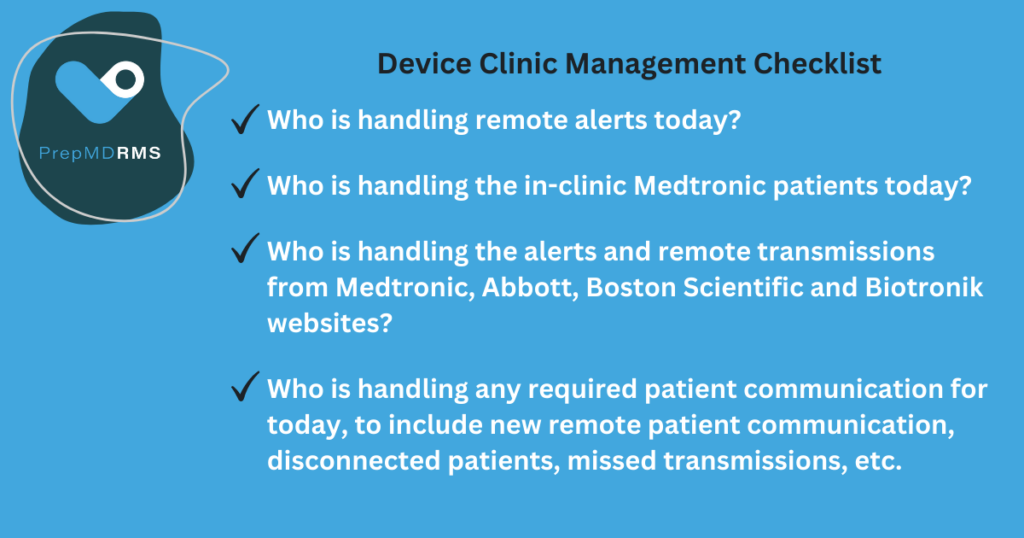
Without an established Remote Monitoring Process in place, How are these questions answered each day?

“it’s important to remember that all of these device clinic remote monitoring tasks are essential, including the variable and hidden tasks that are difficult to quantify. In fact, not recognizing them can certainly lead to a loss of revenue, missed clinical needs, and that overburdening burnout feeling that many clinicians feel.” 

Clinical Workflow: Who, What and How?

In order for a remote monitoring program to run effectively and efficiently the following must be clearly delineated: the tasks (what), the who (which clinic staff is doing each task) and how (training needed, communication, and timeline/processes for all tasks) must be clearly delineated to ensure quality. 

Big Picture Questions to Analyze a Cardiac Device Remote Monitoring Program 

  • What: What are the required tasks for a best-in-class remote monitoring program? 
  • Who: Who on the clinic’s staff is best suited to handle each of these required tasks?  What training is required?
  • How: How will these individuals accomplish the required tasks? What is the overall process and what are each individual contributor’s roles and expectations? What quality measures need to be in place?

Beyond the big picture questions, there are many more questions and details that go into implementing and improving a device remote monitoring program. Each clinic handles things differently, so who is responsible for all the tasks of remote monitoring is extremely variable for each clinic. Efficient handling of remote monitoring is possible, but only with the proper staff and workflow. It is infinitely difficult to quantify all of the tasks of remote monitoring because the same task might take 30 minutes one day and three hours the next. A relevant time and workflow study published in JMIR Cardio 1, “Clinic Time Required for Remote and In-Person Management of Patients With Cardiac Devices: Time and Motion Workflow Evaluation” is a persuasive argument for the efficiencies of remote monitoring. However, this study certainly does NOT take into account all the intricacies and requirements regarding remote monitoring workflow, tasks, training and more.

  • Staffing: Who is/are the right individual(s) on the staff for each of the required tasks? Is it feasible for one  or two individuals or is a dedicated team required for certain tasks?
  • Monitoring of the device company websites: adding, deleting, or transferring patients clinic to clinic. It takes time to go through each of the manufacturer’s websites plus clinic sites.
  • Report Triage: So here is where you’re deciding basically the seriousness of each report. You’re checking to see if the alerts are actionable. You’re checking to see if that patient initiated is actionable. It can include alerts or concerns within the scheduled reports. This also includes making sure those actionable reports or alerts are brought to the proper clinical staff, whether that be to a PA or a physician. 
  • Report Construction: What are the tasks and process needed to complete even just one remote report? This includes everything from data download, clinical write-up, report sign-off, and billing. This also consists of which includes alerts and patient-initiated transmissions. This task will look very different depending on the clinic’s software. It is also important to remember that there is an element of triage here with many alerts found within scheduled transmissions. In these situations, the clinic staff needs to determine if they’re actionable or not actionable, brought to the proper staff, in addition the writing that scheduled report. The person writing the remote report must take patient history into consideration and make appropriate recommendations for clinical care. 
  • Charting/Documentation: The documentation includes moving that report in an organized and accurate manner into the electronic health record, ensuring proper documentation of the report and any follow-up actions needed. 
  • Patient Communication: Each clinic is unique regarding the type of communication done with the patient to inform them of the remote report and this can be done by mail, phone or through a patient portal. If there was something on the remote that is serious enough the patient may need to be seen in clinic. This requires a phone call to the patient to ask about any symptoms they’re having and make a determination to have the patient seen in clinic.
  • Billing: Attention to detail for accurate billing is a challenge. Is the coding/billing accurate, based on the type of report? Is it a scheduled transmission or is it an alert transmission? 
  • Scheduling Patient Follow Up: Is the next visit an in-office or a remote follow-up? This may be as simple as confirming that the schedule is correct on the websites or within the EHR. 
  • Final Documentation and Sign-Off: The next step is about documentation which includes ensuring the report is kept in  the proper place in patient records, as well as getting the final sign off with clinic staff. 
  • Patient Education: This includes initial and ongoing communication to ensure that the patient understands the value and functionality of remote monitoring. This includes instructions that clearly communicate the need for the patient to plug in and keep the monitor connected and explain how it transmits important clinical data as part of their overall care program.
  • Transmission Connectivity and Troubleshooting: This is the task of identifying who is not transmitting data and troubleshooting with those patients in order to help get them transmitting again. It is important to focus on not only getting patients reconnected, but ensuring they are properly connected and transmitting moving forward.
  • Quality: Who is responsible for checking up on quality metrics on report writing, patient communication, connectivity, billing, and how often are these quality checks performed?

Is a Dedicated Remote Monitoring Clinical Staff Required?

Some clinics are set up to have remote monitoring responsibilities assigned as fill-in-work when the clinic staff have availability during their downtime. This can lead to inefficiencies and cause a tremendous amount of confusion about billing practices, and a valuable loss in revenue. 

“We see some clinics with two different mindsets when it comes to remote monitoring: Full-time and dedicated staff versus staff handling on as time-allows basis. Having Clinic staff dedicated to remotes results in a far more efficient and effective remote monitoring program. The clinics without a dedicated staff for remotes are truly at a disadvantage – far more likely to experience an overburdened staff, missed billing opportunities and quality issues.”

Who should be tasked with taking on these important roles and responsibilities to run an effective cardiac device remote monitoring program? Each clinic is unique and must determine who should fill these roles and what roles are even needed. 

  • Administrative Staff: An administrative role can take on so many non-clinical tasks and provide tremendous help and structure to a remote monitoring program. Our team here at PrepMD finds this role to be absolutely indispensable. The administrative staff can help with so many steps to include scheduling, billing, patient communication and connectivity issues, adding, deleting, and transferring of patients on the websites. This frees up the clinical staff for patient care requirements and can certainly help with overburdening and burnout of all staff.
  • Report Writer: The Report Writer is the clinically trained person who is the primary writer of the device patients’ remote report. This person is carrying out the monitoring of all of the websites. This person should be triaging the downloads, constructing the reports, and communicating with other clinical (secondary reviewer) and administrative staff on next steps. Most often this role is filled by an allied professional (Cardiac Device Specialist) who often holds an IBHRE® certification (CCDS and CDRMS). Some clinics choose to outsource this triaging and/or report-writing to a 3rd party vendor remote monitoring service provider. 
  • Secondary Report Reviewer: Typically, the secondary report reviewer oversees and supervisors the primary report writer. Depending on the clinic, this role may be filled by an experienced cardiac device technician, a nurse, a mid-level, even a physician. This person is responsible for carrying out the recommendations for patient management, while considering the patient history, patient medications, previous indications on the remote reports, and the review of the current data and report. This individual reviews, assesses and makes recommendations for further care management. 
  • Final Report Reviewer: Depending on the clinic, sometimes the final report reviewer is a physician or physician’s assistant who review the final interpretations and signs off on the report. 

There are many complexities to running a quality cardiac device remote monitoring program, resulting in frequent burnout, and overburdening of clinic staff. This can and should be avoided if a clinic takes the time to have a clearly defined process, trained staff and reasonable expectations and allowances to ensure each person responsible is capable of completing tasks with quality, competence, and efficiency.  

Sources:
1 Boriani, Giuseppe and von Wagner, Boriani, “Clinic Time Required for Remote and In-Person Management of Patients With Cardiac Devices: Time and Motion Workflow Evaluation, ” NIH, JMIR Cardio, 2021 Jul-Dec; 5(2): e27720, https://www.ncbi.nlm.nih.gov/pmc/articles/PMC8556635/

Female black clinician thumbs up

Best Practices for Running a Cardiac Device Clinic

At a recent PrepMD Webinar a panel discussion was held to share best practices to address the common challenges on cardiac device remote monitoring programs. The panel discussion was led by Rob Lerman, MD, CMO, along with three CCDS-certificated leaders from the PrepMD Clinic Solutions Leadership Team.

Kent Seckinger, CCDS, PrepMD 4+years, cardiac device space for 20 years, working split half between the device industry for manufacturers and the other half working for a large device clinic.

Brianne Terrell, RN, CCDS, PrepMD 1 year, device clinic for about 10 years working in support of device implantation, patient consultation, perioperative device management, in-clinic follow up, and remote monitoring. 

Janet Cedric, CCDS, worked at Prepmd 4.5+ years and in the cardiac space for about 24 years. I’ve managed and started up device clinics. 

Q: Based on your years working in cardiac device clinics, can you share any advice or tips on how clinics handle the staffing requirements needed to run their remote monitoring programs? 

Brianne: I worked in a clinic of all registered nurses and our responsibilities made for very fragmented days.  We were all responsible for seeing device clinic patients in person and handling remote monitoring patients. Obviously, the patients seen in person seemed to always get the most priority. During and after COVID, we ended up having to send many of our nurses to work from home and what we found was we were able to work more efficiently when we had dedicated staff for remote monitoring. So it was really one of those aha moments.

Janet:  I’ve been fortunate enough that the clinics that I worked in had dedicated staff who were well-trained and supported, so they were all very capable of being able to recognize and manage the complex issues of cardiac devices and remote monitoring. Some clinics I’ve been in touch with decided that due to COVID staff changes and shortages they needed to move to a third party vendor to manage their remote monitoring.

Kent: As a clinic increases in patient size, so do the remote transmissions and there comes a balancing point where a limited staff, or in some cases one individual, is responsible for in-person and remote care of device patients. Having a dedicated staff for remote monitoring clearly helps as a clinic grows in size and allows the clinic to manage and improve efficiencies. The best situation to start to improve a device clinic is to be able to have that right mix of in-clinic staff versus dedicated remote staff.

Q: What would you say most clinics feel are the biggest challenges faced with running an effective and efficient remote monitoring program?

Kent: Many of the biggest efficiencies any clinic should achieve is centered around patient education. Too often a patient is sent home after device implantation with a transmitter without any education around the device, the transmitter and the importance of remote monitoring. Spending some dedicated time at the first post-op follow up visit which can take a good 30- 40 minutes is crucial.  Taking time to educate the patient and the family is so crucial. This patient communication and education should clearly explain the benefits of remote monitoring and how this will ultimately make the patient’s life safer and easier by reducing unnecessary in-office visits and hospitalizations. It also helps to explain the billing associated with remote monitoring so they are not surprised or confused. This patient communication will help reduce a lot of that hidden workload and burden on the clinic staff, including unnecessary patient-initiated transmissions or connectivity issues.

Brianne: I find that looking back 10 years ago versus today the remote monitoring population and requirements of any clinic has just exploded and these clinics are feeling the pressure of managing it all. It’s rare that we talk to a clinic that does not feel the need to have more hands on deck to manage their remote monitoring. I would say the biggest challenge most clinics face is the huge remote monitoring workload burden and figuring out the best workflow for their individual clinic.

Janet: I’d say the biggest challenge remote monitoring clinics face is not having the appropriate dedicated staff. We see a lot of benefit from clinics hiring dedicated administrative staff to help with remote monitoring. Especially when the software is integrated with EMR, there are a lot of backend tasks that can be crucial to making things more efficient. There are many times when the remote monitoring staff will need to talk to the in-clinic staff. If you have a dedicated staff for remote monitoring they will be able to identify any patient care problems earlier and get that patient into be seen by a clinician sooner and ultimately providing improved patient care.

Q:Based on your experience, do you have some advice or tips that you can recommend to those trying to start up or improve their remote monitoring program? 

Brianne: The value of a dedicated staff for remote monitoring cannot be underestimated, in addition to the importance of a thorough communication process to educate patients about remote monitoring and ensure their monitors are connected and transmitting.

Kent: If you really want to reduce your clinic workload, it’s really coming down to educating that patient from the start. The result will be fewer patients with disconnected monitors and fewer calls from disgruntled patients who don’t understand the remote monitoring billing. This patient communication is a really crucial step and sets the stage to reduce a lot of that overload, which allows clinics to operate at a much higher efficiency level.

If you are a clinic manager with questions or need help with the management of your cardiac device remote monitoring responsibilities, contact the PrepMD Clinic Solutions Leadership Team.