Remote monitoring is often avoided because it is felt that with the addition of remote monitoring, it will completely overburden staff. Remote monitoring can be a source of data overload that can create more work to sort through. Triage of remote alerts can be time consuming and an unpredictable workload on a daily basis.
With increasing clinic size, it is virtually impossible to see all patients in the office on a regular basis. Clinic schedules are often consumed with routine follow-ups that could be done remotely.With the increased complexity and number of devices, clinics are responsible for managing data on multiple sites including Medtronic Carelink, Boston Scientific Latitude, Biotronik, and Abbott Laboratories (St. Jude) Merlin. Several complex data management steps are involved in the process. This includes downloading data from multiple sites, generating reports, reviewing reports, and transferring the reports into hospital EMR systems such as EPIC, Allscripts, and Cerner.
Difficult to find and employ CIED trained, experienced and CCDS staff. The tasks of remote monitoring have traditionally been integrated into a clinician’s already full clinic schedule. Inability to dedicate a staff member exclusively to remote monitoring to maintain the efficiency and quality of remote monitoring. Additional resources required to coordinate a remote monitoring program put additional strain on office and administrative workflow.
Remote monitoring CPT codes such as 93294, 93295, 93296, 93297, 93298 and 93299 are all associated with remote monitoring device patients. Most clinics struggle with maximizing the billing and reimbursement potential, leading to revenue losses. Software solutions are associated with large upfront costs and ongoing subscription fees. Clinics that already invested in a software solution, such as Paceart can find it unreasonable to invest in a different solution or service.
The Standard of Care
Research shows that complementing remote cardiac device patient interrogation with in-person device checks enables healthcare providers to provide a better standard of care to their patients.
Remote monitoring allows the physician to implement an improved strategy and care plan based on review of the patient’s in clinic visits and remote interrogations. While remote monitoring is crucial to a successful delivery of care, hospitals and device clinics have several challenges while monitoring their cardiac patients who have pacemakers, ICDs and ILRs (loop recorders). These challenges are related to workflow, staffing, patient volume and capturing reimbursement potential. Overburdening of the clinics may sometimes lead to backlogs, which further leads to challenges in ensuring quality patient care.
Alert Management
Advancements in remote monitoring technologies have enabled cardiac devices to seamlessly transmit critical data to health care providers.
Remote monitoring alerts practitioners to changes in lead or device function that would otherwise go undetected until the next scheduled in-person or remote interrogation. Remote alert management is able to detect device failure and alert clinicians to possible human programming errors such as the failure to activate tachyarrhythmia therapies. Remote interrogation and alert management technologies complement routine follow-up appointments, while maintaining an in-person evaluation schedule. Studies demonstrate that well-planned remote monitoring and interrogation helps achieve follow-up goals and improve device clinic workflow efficiency.
Better Patient Care
Patients report high satisfaction and acceptance of remote monitoring technology. Clinicians find the data reliable for evaluating device function and detecting arrhythmias while reducing the frequency of in-person evaluations.
Various studies have explored the ability of remote monitoring to detect problems early, thereby improving patient outcomes. Research demonstrates that incorporating remote monitoring into follow-up practice ensures greater patient retention and improves adherence to scheduled patient evaluations. These studies form the basis for the HRS’ recommendation that remote monitoring is the standard of care for patients with CIEDs (including pacemakers, ICDs and loop recorders), with alert-driven follow ups replacing most routine in-person interrogations.
PrepMD Remote Monitoring Services (PrepMD RMS) is thrilled to announce an exceptional Net Promoter Score (NPS) of 78, a testament to the high satisfaction and loyalty of our customers. This score, derived from feedback from clinic managers and EPs who rely on our remote monitoring services, not only underscores our commitment to excellence in healthcare technology and patient care but also places us significantly above the industry standard in customer satisfaction.
Understanding the Net Promoter Score
What is NPS?
The Net Promoter Score is a highly regarded metric used to gauge customer satisfaction and loyalty. It is calculated based on responses to a single question: “How likely are you to recommend our company/product/service to a friend or colleague?” The scoring is on a 0-10 scale, with respondents categorized as Promoters (9-10 score), Passives (7-8 score), and Detractors (0-6 score).
What Does a Score of 78 Mean?
An NPS of 78 is exceptional and indicative of outstanding customer satisfaction and loyalty. Scores above 50 are generally deemed excellent, while a score over 70 is considered world-class. This high score reflects the trust and value our customers place in our services and our commitment to not just meeting but exceeding their expectations.
Overall Experience and Service Team Excellence The survey responses indicate a profound satisfaction with the overall experience of PrepMD’s services. Scores consistently rated at or near the highest possible level, underscoring our team’s dedication to providing outstanding service.
The Importance of IBHRE® Certified Representatives A critical aspect of our service includes the provision of dedicated IBHRE® certified representatives. Respondents rated this as highly important, with our representatives’ knowledge of alert protocols and remote monitoring protocols receiving the highest marks. This demonstrates the value placed on specialized expertise in patient care.
Customizable Alert Protocols and Accuracy Customization and accuracy in alert protocols are pivotal in remote patient monitoring. Survey participants emphasized the significance of these aspects, with PrepMD meeting these high expectations consistently.
Efficiency in Processing and Triaging Alerts Efficient processing of remote transmissions and the triaging of alerts are fundamental to effective patient monitoring. Our clients trust in our ability to manage these tasks promptly and accurately, as evidenced by the survey results.
Recommendation and Trust One of the most telling indicators of customer satisfaction is the willingness to recommend a service. An overwhelming majority of respondents indicated a high likelihood of recommending PrepMD, attesting to the trust and confidence they place in our services.
The NPS score of 78 is a resounding affirmation of the trust, satisfaction, and loyalty of our clients. It’s a reflection of our unwavering commitment to excellence and our continuous effort to innovate and improve. At PrepMD, we are not just a service provider; we are a partner in patient care, dedicated to enhancing the efficiency and effectiveness of cardiac care through our advanced remote monitoring services.
Discover how PrepMD Remote Monitoring Services Clinic Solutions Team can transform your patient monitoring experience. Contact us for more information or to schedule a demonstration of our services.
It certainly is an understatement to say that running an effective and efficient cardiac device remote monitoring clinic is a challenge. Any clinic manager who is evaluating an existing remote monitoring program for improvements or who is launching a new remote monitoring program must dedicate time to analyze their clinic’s current staff, workflow, and capabilities against what is needed. This will help anticipate and stave off many of the most common challenges faced by device clinics – problems such as staff burn-out, unscheduled patients and incorrect billing.
Every clinic has a unique workflow, complications, and issues when it comes to running a cardiac device remote monitoring program. Clinics receive tremendously large amounts of device transmission clinical data coming in daily. Many clinics do not realize the value of remote monitoring and operate without a dedicated remote monitoring staff. Clinic managers may underestimate the amount of hidden workflow involved in remote monitoring which causes many pain points for staff struggling through the heavy workflow. Many clinics struggle with the standardization of an alert protocol and alert criteria. There is certainly a prevalence and frequent misunderstanding of the value and requirements of remote monitoring which commonly leads to ineffectively managed remote monitoring programs.
“Unfortunately, there is a lack of a unified approach to remote monitoring across the entire cardiac device remote monitoring space. This leads to confusion of what is needed to run a device remote monitoring program. There is an unfortunate tendency where this type of remote care can lead to a devaluing of the work being performed, simply because there is not a face-to-face patient interaction taking place, the value of the clinical care should not be minimized.” Jess Rizzo, CCDS, PrepMD Clinical Operations Director
Without an established Remote Monitoring Process in place, How are these questions answered each day?
“it’s important to remember that all of these device clinic remote monitoring tasks are essential, including the variable and hidden tasks that are difficult to quantify. In fact, not recognizing them can certainly lead to a loss of revenue, missed clinical needs, and that overburdening burnout feeling that many clinicians feel.”
Clinical Workflow: Who, What and How?
In order for a remote monitoring program to run effectively and efficiently the following must be clearly delineated: the tasks (what), the who (which clinic staff is doing each task) and how (training needed, communication, and timeline/processes for all tasks) must be clearly delineated to ensure quality.
Big Picture Questions to Analyze a Cardiac Device Remote Monitoring Program
What: What are the required tasks for a best-in-class remote monitoring program?
Who: Who on the clinic’s staff is best suited to handle each of these required tasks? What training is required?
How: How will these individuals accomplish the required tasks? What is the overall process and what are each individual contributor’s roles and expectations? What quality measures need to be in place?
Beyond the big picture questions, there are many more questions and details that go into implementing and improving a device remote monitoring program. Each clinic handles things differently, so who is responsible for all the tasks of remote monitoring is extremely variable for each clinic. Efficient handling of remote monitoring is possible, but only with the proper staff and workflow. It is infinitely difficult to quantify all of the tasksof remote monitoring because the same task might take 30 minutes one day and three hours the next. A relevant time and workflow study published in JMIR Cardio1, “Clinic Time Required for Remote and In-Person Management of Patients With Cardiac Devices: Time and Motion Workflow Evaluation” is a persuasive argument for the efficiencies of remote monitoring. However, this study certainly does NOT take into account all the intricacies and requirements regarding remote monitoring workflow, tasks, training and more.
Staffing: Who is/are the right individual(s) on the staff for each of the required tasks? Is it feasible for one or two individuals or is a dedicated team required for certain tasks?
Monitoring of the device company websites: adding, deleting, or transferring patients clinic to clinic. It takes time to go through each of the manufacturer’s websites plus clinic sites.
Report Triage: So here is where you’re deciding basically the seriousness of each report. You’re checking to see if the alerts are actionable. You’re checking to see if that patient initiated is actionable. It can include alerts or concerns within the scheduled reports. This also includes making sure those actionable reports or alerts are brought to the proper clinical staff, whether that be to a PA or a physician.
Report Construction: What are the tasks and process needed to complete even just one remote report? This includes everything from data download, clinical write-up, report sign-off, and billing. This also consists of which includes alerts and patient-initiated transmissions. This task will look very different depending on the clinic’s software. It is also important to remember that there is an element of triage here with many alerts found within scheduled transmissions. In these situations, the clinic staff needs to determine if they’re actionable or not actionable, brought to the proper staff, in addition the writing that scheduled report. The person writing the remote report must take patient history into consideration and make appropriate recommendations for clinical care.
Charting/Documentation: The documentation includes moving that report in an organized and accurate manner into the electronic health record, ensuring proper documentation of the report and any follow-up actions needed.
Patient Communication: Each clinic is unique regarding the type of communication done with the patient to inform them of the remote report and this can be done by mail, phone or through a patient portal. If there was something on the remote that is serious enough the patient may need to be seen in clinic. This requires a phone call to the patient to ask about any symptoms they’re having and make a determination to have the patient seen in clinic.
Billing: Attention to detail for accurate billing is a challenge. Is the coding/billing accurate, based on the type of report? Is it a scheduled transmission or is it an alert transmission?
Scheduling Patient Follow Up: Is the next visit an in-office or a remote follow-up? This may be as simple as confirming that the schedule is correct on the websites or within the EHR.
Final Documentation and Sign-Off: The next step is about documentation which includes ensuring the report is kept in the proper place in patient records, as well as getting the final sign off with clinic staff.
Patient Education: This includes initial and ongoing communication to ensure that the patient understands the value and functionality of remote monitoring. This includes instructions that clearly communicate the need for the patient to plug in and keep the monitor connected and explain how it transmits important clinical data as part of their overall care program.
Transmission Connectivity and Troubleshooting: This is the task of identifying who is not transmitting data and troubleshooting with those patients in order to help get them transmitting again.It is important to focus on not only getting patients reconnected, but ensuring they are properly connected and transmitting moving forward.
Quality: Who is responsible for checking up on quality metrics on report writing, patient communication, connectivity, billing, and how often are these quality checks performed?
Is a Dedicated Remote Monitoring Clinical Staff Required?
Some clinics are set up to have remote monitoring responsibilities assigned as fill-in-work when the clinic staff have availability during their downtime. This can lead to inefficiencies and cause a tremendous amount of confusion about billing practices, and a valuable loss in revenue.
“We see some clinics with two different mindsets when it comes to remote monitoring: Full-time and dedicated staff versus staff handling on as time-allows basis. Having Clinic staff dedicated to remotes results in a far more efficient and effective remote monitoring program. The clinics without a dedicated staff for remotes are truly at a disadvantage – far more likely to experience an overburdened staff, missed billing opportunities and quality issues.”
Who should be tasked with taking on these important roles and responsibilities to run an effective cardiac device remote monitoring program? Each clinic is unique and must determine who should fill these roles and what roles are even needed.
Administrative Staff: An administrative role can take on so many non-clinical tasks and provide tremendous help and structure to a remote monitoring program. Our team here at PrepMD finds this role to be absolutely indispensable. The administrative staff can help with so many steps to include scheduling, billing, patient communication and connectivity issues, adding, deleting, and transferring of patients on the websites. This frees up the clinical staff for patient care requirements and can certainly help with overburdening and burnout of all staff.
Report Writer: The Report Writer is the clinically trained person who is the primary writer of the device patients’ remote report. This person is carrying out the monitoring of all of the websites. This person should be triaging the downloads, constructing the reports, and communicating with other clinical (secondary reviewer) and administrative staff on next steps. Most often this role is filled by an allied professional (Cardiac Device Specialist) who often holds an IBHRE® certification (CCDS and CDRMS). Some clinics choose to outsource this triaging and/or report-writing to a 3rd party vendor remote monitoring service provider.
Secondary Report Reviewer: Typically, the secondary report reviewer oversees and supervisors the primary report writer. Depending on the clinic, this role may be filled by an experienced cardiac device technician, a nurse, a mid-level, even a physician. This person is responsible for carrying out the recommendations for patient management, while considering the patient history, patient medications, previous indications on the remote reports, and the review of the current data and report. This individual reviews, assesses and makes recommendations for further care management.
Final Report Reviewer: Depending on the clinic, sometimes the final report reviewer is a physician or physician’s assistant who review the final interpretations and signs off on the report.
There are many complexities to running a quality cardiac device remote monitoring program, resulting in frequent burnout, and overburdening of clinic staff. This can and should be avoided if a clinic takes the time to have a clearly defined process, trained staff and reasonable expectations and allowances to ensure each person responsible is capable of completing tasks with quality, competence, and efficiency.
Sources: 1 Boriani, Giuseppe and von Wagner, Boriani, “Clinic Time Required for Remote and In-Person Management of Patients With Cardiac Devices: Time and Motion Workflow Evaluation, ” NIH, JMIR Cardio, 2021 Jul-Dec; 5(2): e27720, https://www.ncbi.nlm.nih.gov/pmc/articles/PMC8556635/
At a recent PrepMD Webinar a panel discussion was held to share best practices to address the common challenges on cardiac device remote monitoring programs. The panel discussion was led by Rob Lerman, MD, CMO, along with three CCDS-certificated leaders from the PrepMD Clinic Solutions Leadership Team.
Kent Seckinger, CCDS, PrepMD 4+years, cardiac device space for 20 years, working split half between the device industry for manufacturers and the other half working for a large device clinic.
Brianne Terrell, RN, CCDS, PrepMD 1 year, device clinic for about 10 years working in support of device implantation, patient consultation, perioperative device management, in-clinic follow up, and remote monitoring.
Janet Cedric, CCDS, worked at Prepmd 4.5+ years and in the cardiac space for about 24 years. I’ve managed and started up device clinics.
Q: Based on your years working in cardiac device clinics, can you share any advice or tips on how clinics handle the staffing requirements needed to run their remote monitoring programs?
Brianne: I worked in a clinic of all registered nurses and our responsibilities made for very fragmented days. We were all responsible for seeing device clinic patients in person and handling remote monitoring patients. Obviously, the patients seen in person seemed to always get the most priority. During and after COVID, we ended up having to send many of our nurses to work from home and what we found was we were able to work more efficiently when we had dedicated staff for remote monitoring. So it was really one of those aha moments.
Janet: I’ve been fortunate enough that the clinics that I worked in had dedicated staff who were well-trained and supported, so they were all very capable of being able to recognize and manage the complex issues of cardiac devices and remote monitoring. Some clinics I’ve been in touch with decided that due to COVID staff changes and shortages they needed to move to a third party vendorto manage their remote monitoring.
Kent:As a clinic increases in patient size, so do the remote transmissions and there comes a balancing point where a limited staff, or in some cases one individual, is responsible for in-person and remote care of device patients. Having a dedicated staff for remote monitoring clearly helps as a clinic grows in size and allows the clinic to manage and improve efficiencies. The best situation to start to improve a device clinic is to be able to have that right mix of in-clinic staff versus dedicated remote staff.
Q: What would you say most clinics feel are the biggest challenges faced with running an effective and efficient remote monitoring program?
Kent:Many of the biggest efficiencies any clinic should achieve is centered around patient education. Too often a patient is sent home after device implantation with a transmitter without any education around the device, the transmitter and the importance of remote monitoring. Spending some dedicated time at the first post-op follow up visit which can take a good 30- 40 minutes is crucial. Taking time to educate the patient and the family is so crucial. This patient communication and education should clearly explain the benefits of remote monitoring and how this will ultimately make the patient’s life safer and easier by reducing unnecessary in-office visits and hospitalizations. It also helps to explain the billing associated with remote monitoring so they are not surprised or confused. This patient communication will help reduce a lot of that hidden workload and burden on the clinic staff, including unnecessary patient-initiated transmissions or connectivity issues.
Brianne: I find that looking back 10 years ago versus today the remote monitoring population and requirements of any clinic has just exploded and these clinics are feeling the pressure of managing it all. It’s rare that we talk to a clinic that does not feel the need to have more hands on deck to manage their remote monitoring. I would say the biggest challenge most clinics face is the huge remote monitoring workload burden and figuring out the best workflow for their individual clinic.
Janet: I’d say the biggest challenge remote monitoring clinics face is not having the appropriate dedicated staff. We see a lot of benefit from clinics hiring dedicated administrative staff to help with remote monitoring. Especially when the software is integrated with EMR, there are a lot of backend tasks that can be crucial to making things more efficient. There are many times when the remote monitoring staff will need to talk to the in-clinic staff. If you have a dedicated staff for remote monitoring they will be able to identify any patient care problems earlier and get that patient into be seen by a clinician sooner and ultimately providing improved patient care.
Q:Based on your experience, do you have some advice or tips that you can recommend to those trying to start up or improve their remote monitoring program?
Brianne:The value of a dedicated staff for remote monitoring cannot be underestimated, in addition to the importance of a thorough communication process to educate patients about remote monitoring and ensure their monitors are connected and transmitting.
Kent:If you really want to reduce your clinic workload, it’s really coming down to educating that patient from the start. The result will be fewer patients with disconnected monitors and fewer calls from disgruntled patients who don’t understand the remote monitoring billing. This patient communication is a really crucial step and sets the stage to reduce a lot of that overload, which allows clinics to operate at a much higher efficiency level.
If you are a clinic manager with questions or need help with the management of your cardiac device remote monitoring responsibilities, contact the PrepMD Clinic Solutions Leadership Team.
Communication and Compliance: Patient Outreach Communication and CIED Remote Monitoring Compliance
In our last blog post, we discussed the potential clinical and economic benefits of remote monitoring for patients with Cardiovascular Implantable Electronic Devices (CIEDs). However, in order to realize these benefits there are multiple processes that need to be functioning at a high level. Several of those processes involve ensuring patient compliance, as both clinical and financial outcomes depend on consistent, reliable monitoring and reporting. Even though contemporary CIED transmitters and apps can be programmed to automatically communicate with devices and send transmission information to remote monitoring software platforms, disconnected monitors and the resultant missed transmissions are common. Scheduling of routine transmissions can also be time-consuming and confusing, with different processes for different manufacturers and devices. Troubleshooting disconnected monitors involves communication with patients which itself requires skill, patience, and understanding.
At a recent PrepMD RMS educational webinar, Dr. Robert Lerman, Former Chief Medical Officer at PrepMD, moderated a discussion on Remote Monitoring Compliance and Patient Communication featuring two members of the PrepMD leadership team – Keith Nicholson, CCDS, PrepMD Business Operations Manager and Amy Harris, CCDS, Lead Patient Outreach Specialist.
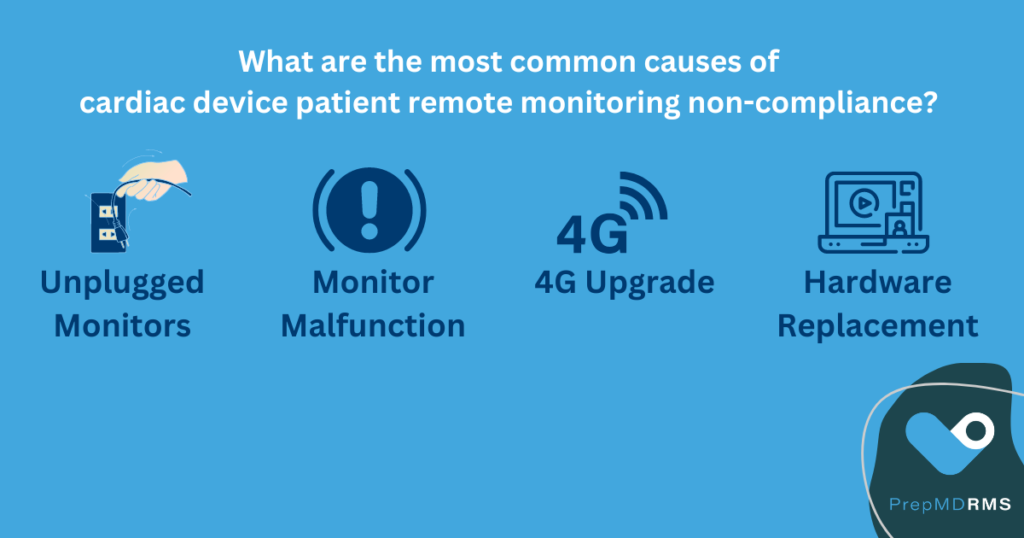
The most common causes of device patient remote monitoring non-compliance
Keith Nicholson kicked off the conversation by acknowledging that despite best efforts, it is inevitable that some patient monitors will become disconnected.
“Regardless of best practices, disconnected patient monitors will happen. Patients unplug their monitor and forget about it, they move, or they need their device hardware upgraded. Every clinic should have a plan in place for how to deal with disconnected monitors.”
Benefits of a dedicated team Amy Harris discussed the most common approach to missed transmissions and disconnected monitors where every remote monitoring team member participates and just picks up the work when they can. With minimal staff time available, sometimes patients are simply referred to the manufacturer technical support phone line, but that can be fraught with challenges. Prompt selections or hold times may deter patients or family members, and technical issues with the monitors can sometimes require more in-depth troubleshooting just to diagnose the issue. Remote monitoring staff are typically busy keeping up with reading scheduled and unscheduled transmissions and alert escalations- reconnecting patients is often put on the back burner and addressed in piecemeal fashion.
“Whenever that’s the case, you may find that your disconnection rate is occurring more quickly than your recovery rate,” said Harris. She emphasized what she sees as the key ingredient to patient education success for patients at device clinics, “Clinics will be most effective if they have adedicated person or team assigned to managing effective communication with patients to ensure remote monitoring compliance.”
The inherent difficulties in getting patients reconnected, paired with the overall high volume of disconnected patients are common reasons to designate a dedicated individual or individuals to handle patient communication. This dedicated communication will ensure a better understanding of where each patient is within the process and helps prevent troubleshooting overlap or redundancy by limiting the number of individuals who are reaching out to patients.
“A dedicated staff member(s) will keep the patient communication process as brief and effective as possible for not just the patient, but clinical staff as well,” explained Harris.
Additionally, while on the phone with patients, dedicated outreach specialists can take the opportunity to fill-in any gaps in knowledge that patients may have about remote monitoring, update scheduling and vendor websites, or deactivate accounts of patients no longer being monitored.
Finally, there is a considerable amount of technical knowledge needed for the individual or individuals on the team who will be handling patient education and communication. There are at least 15 different monitoring systems across all the vendors, including bedside units and cell phone applications, and each monitor requires its own troubleshooting process. Familiarity is required in order to recognize each display of the various error codes or light sequences, as well as device compatibility and 4G connection requirements. Taking this wealth of complex technical knowledge anddistilling only the required communication needed to accomplish what each patient needs can be complex and challenging.
What are the most common causes of patient non-compliance with remote monitoring?
Unplugged monitors
Monitor malfunction
4G upgrades
Hardware replacement
Unplugged monitors are the most common cause of non-compliance. They can come loose from the power outlet by mistake. Those are an easy fix! Sometimes however, there are patients who don’t understand how remote monitoring works and may intentionally disconnect the power in between scheduled transmissions. Other issues may include poor placement within the room- such as under the bed- or patients going on vacation or out of town without their monitors. Here patient education is the key. Clearly when monitors malfunction or where there are new 4G connection requirements, detailed product knowledge is needed to troubleshoot. Sometimes our outreach specialists find it helpful to conference in patients and industry technical support staff but they stay on the call as well to facilitate communication. Currently patients who get new devices or replacement devices may have to wait on the shipment of back-ordered monitors. Education of patients on the use of smartphone monitoring apps when available can at times alleviate those supply chain issues, while other times they are unavoidable.
We have a dedicated team. Do we also need formal outreach protocols? We recommend setting up a protocol with clinic preferences in mind for how to optimize the process, to clarify roles and responsibilities so that everyone is operating with the same understanding of who is doing what. Examples of the general protocol for patient communication may detail:
Examples of patient communication protocol
It is also important to properly document and keep tabs on patient outreach, including what was discussed with patients, and noting action and future plans such as patient education sessions.
Patients with Manual Transmissions: While most devices can be set up to send scheduled transmissions automatically, there are still some legacy devices out there that require patients to transmit manually. Some clinics will have to dedicate a staff member to calling the patient to walk them through the process of the manual transmission and explain to them what to expect and inform them of the next transmission date. Many times after doing that once, the patients will be able to handle the manual transmission on their own the next time. Some patients however, will need reminders before every scheduled transmission.
Once a backlog of disconnected monitors is cleared, what does maintenance look like?
Harris: “Once you get the [backlog] volume down to a manageable number, it’ll be much easier to just periodically scan the vendor websites for any connectivity issues or missed transmissions. You can also stay on top of upcoming schedules and proactively keep an eye on that. Depending on the size of the clinic…weekly checks would most likely be appropriate.”
What are some of the most surprising patient misconceptions encountered?
Harris: “I’ve heard some patients have a concern that their electricity bill is going to skyrocket or that even infrequent use of the remote monitor will drain the battery of their device or that the monitor being plugged in at the bedside is emitting harmful rays, or that they are incurring costs in the timeframe in between scheduled transmissions. These are times when education is provided much more thoroughly!”
Finally Nicholson was asked what kind of professional and personal traits he looks for in an outreach specialist in addition to the technical familiarity with the devices and monitors?
“Someone well versed in the EMR and kind of digging through and figuring out what’s going on , but also someone who is just kind of patient because some of these patients are frustrated and it’s not anyone’s fault, they want to get to the bottom of it. And sometimes just kind of having that calming presence to talk to the patient through is gonna be a lot more successful.”
Contact PrepMD to learn more about how they help address common CIED remote monitoring device clinic challenges with regard to patient communication and CIED Remote Monitoring compliance.
The Economics of Cardiac Device Remote Patient Monitoring
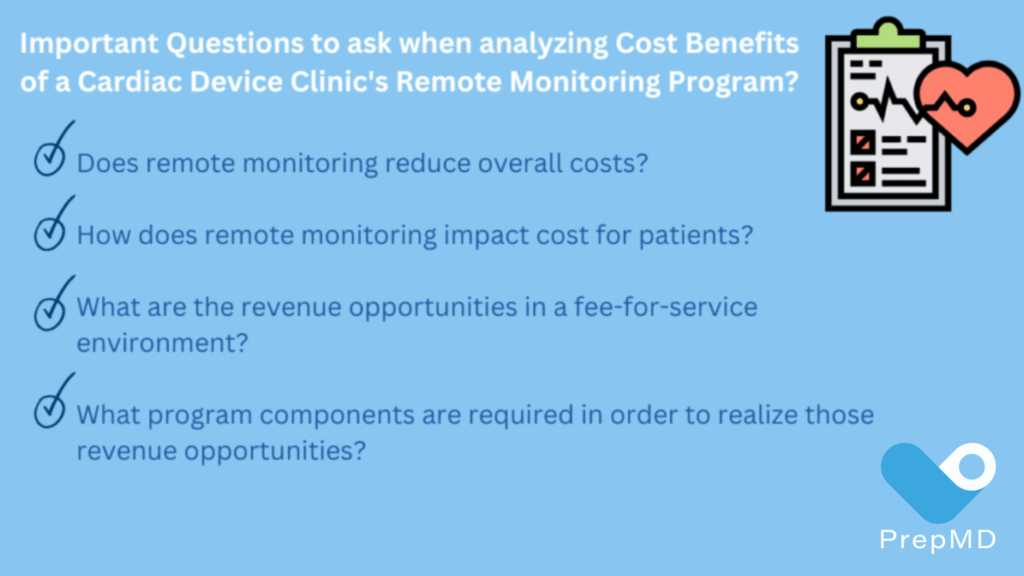
Almost universally, Cardiac Device Clinic Managers face many common challenges and need to tackle some difficult questions when analyzing a CIED remote monitoring program. Many of these questions relate to financial considerations.
Dr. Lerman, Senior Cardiologist and Physician Executive with decades of experience in both clinical and business aspects of healthcare, outlined some of the most common questions asked by clinic managers as they consider starting a remote monitoring program, “The discussion should always start with patient care and clinical benefits.
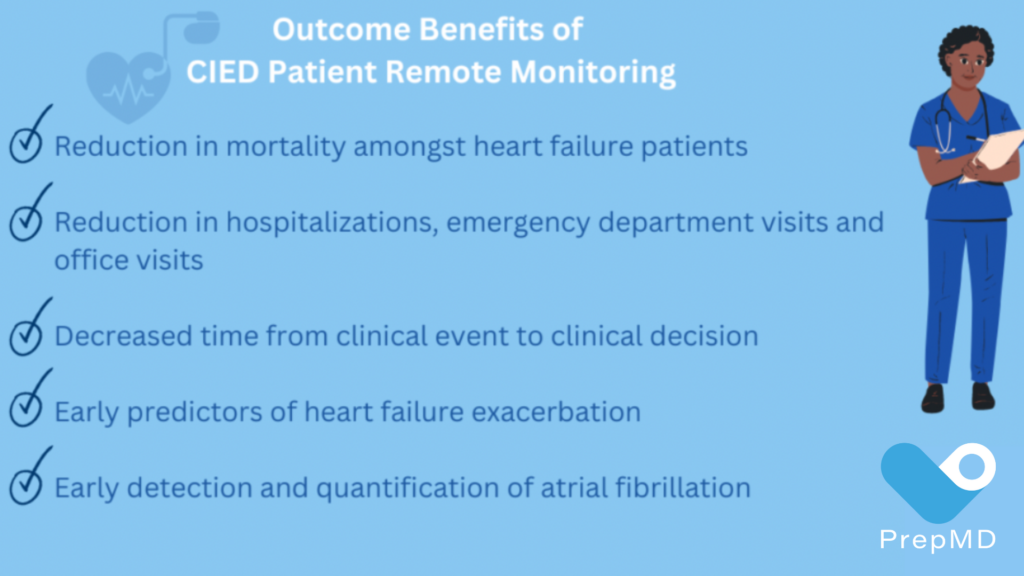
Key factors to examine when considering the outcome benefits for cardiac device patient remote monitoring include: -Reduction in mortality amongst heart failure patients -Reduction in hospitalizations, emergency department visits and office visits -Decreased time from clinical event to clinical decision -Early predictors of heart failure exacerbation -Early detection and quantification of atrial fibrillation”
In 2015, as a result of the many outcomes-benefits studies done over the years, the Heart Rhythm Society designated remote monitoring and interrogation as a Class IA recommendation, when combined with at least one annual in-person evaluation. Furthermore, all patients should be offered remote monitoring as part of the follow-up management strategy when technically feasible.
So, what are the costs associated with achieving the clinical outcome advantages of a remote monitoring program? Any program that enhances patient outcomes should garner support when the economics are neutral or positive. However, programs that significantly escalate costs may face challenges in gaining traction, even if they offer patient benefits.
While cost is important, the overall economic picture depends largely on whether the clinical program exists in a fee-for-service or so-called “fee-for-value” environment (managed care, accountable care organizations, etc.)
In fee-for-service environments, revenue generation is balanced against cost. In fee-for-value, cost reduction is the primary economic driver, as it can lead to shared savings from payors. Complicating matters is that the long awaited transformation from fee-for-service to fee-for-value is still largely a work in progress, and most organizations are somewhere in the middle with participation in both types of financial arrangements. When addressing remote monitoring, it is important to consider the following questions:
Device Clinic Cost Benefit Analysis
One way to answer the first question is through formal health economics research, but those studies can be very challenging, especially when trying to decide how much to value studies done abroad or in a different reimbursement or healthcare climate. The TARIFF Study1is one frequently referenced Italian study published in 2017, which showed that remote monitoring resulted in statistically significant reductions in hospitalizations, emergency visits, outpatient diagnostic tests, and clinical evaluations compared with standard care. The overall mean annual cost per patient in the remote monitoring group was 54% lower than standard care, driven primarily by a lower cost of cardiovascular hospitalizations. This cost reduction is consistent with the hypothesis that earlier identification of clinical or device issues will result in earlier intervention and less complicated hospitalizations.
Another relevant study published in 2021 in the Canadian Journal of Cardiology2followed ICDs and CRT-D patients for an average of 50 months. The data showed that remote monitoring was associated with both a lower risk of death and cardiovascular hospitalizations, with cost savings observed over five years of over $12,000 per patient. In summary, while the evidence that remote monitoring lowers overall costs is not as strong as the clinical outcomes evidence, there is little evidence suggesting that costs will be increased.
“Device Clinic managers can reasonably conclude that implementing a high quality remote monitoring program will result in improved patient care and better clinical outcomes, with a cost-neutral or possible reduction in overall costs to the clinic or hospital,” explained Dr. Lerman
As important as it is to evaluate the economic impact of remote monitoring on the healthcare organization, it is just as critical to consider the impact on individual patients. A 2021 American Journal of Cardiology article3described how cardiac device patients frequently express concerns over remote monitoring, cost transparency, and billing.
Kent Seckinger, CCDS, PrepMD Customer Success Director, discussed how to best approach these common patient concerns. “What it really comes down to is patient education and transparency. Educating the device patients is critical to ensuring that they know that there are real benefits for them with remote monitoring. A discussion with each patient should include the specifics of the billing model and relevant regional reimbursement rates, and most importantly, an explanation of the clinical benefits realized with remote monitoring, such as reduction of hospitalizations and ER visits.”
Patients better understand remote monitoring costs when they grasp the clinical rationale and benefits. Without this patient education, patients often call the clinic in frustration when they receive bills that they don’t understand, increasing staff burden. Even worse, they may decide to disconnect their monitors. It is crucial to discuss remote monitoring with the patient and their family members no later than the very first visit immediately after implantation. This ensures that they understand its importance and implications from the outset
Seckinger explained that the PrepMD Clinic Solutions Leadership Team have found that a little patient education goes a long way. “The patient often feels they’ve taken ownership in the management of their care as well. A critical 30-minute discussion on the benefits of remote monitoring with the patient at their first visit will definitely save time in the long run.”
While the primary motivation to provide remote monitoring services for CIEDs is to provide the highest quality patient care, organizations that participate in fee-for-service environments have an opportunity for increased revenue generation. That is because remote monitoring best practices involve improving patient compliance, which along with a detailed understanding of billing requirements, typically leads to a higher overall volume of billable transmissions. ICD transmissions can typically be billed quarterly, pacemakers every 3-6 months, and ILR and heart failure monitoring can often be billed monthly. This increased transmission volume usually more than compensates for the costs incurred by a third party remote monitoring service if one is utilized. Although there is still a fair amount of regional differences in reimbursement for some remote monitoring services, typically, a well run and legally compliant program is profitable.
It is important however, to be cognizant of the cost burden of remote monitoring on patients, especially for Implantable Loop Recorders (ILRs) and devices where heart failure monitoring can be performed and billed. In both of these circumstances, Medicare allows billing for 30-day monitoring periods, and while such billing meets regulatory requirements when clinically indicated, patient co-payments can add up quickly, especially in regions with high reimbursement.
Greg O’Neal, CCDS, CEPS, PrepMD Director of Technology and Business Development discussed the 2015 HRS Expert Consensus Statement4 of remote interrogation and monitoring for cardiovascular implantable electronic devices. The HRS consensus statement described a cadence of regularly scheduled quarterly remote monitoring transmissions for pacemakers and implantable defibrillators (monthly for ILRs and insertable cardiac monitors) with ad hoc in-person evaluations based on device or patient generated alerts plus a single scheduled annual in-person evaluation, all of which can be potentially reimbursable.
In developing a fee-for-service model, a clinic must be able to optimize the frequency of the remote monitoring transmissions with the appropriate CPT code usage for each device type, including the professional and technical components, while keeping all the patient transmission schedules consistent on each of the vendor websites for all devices.
Greg O’Neal, PrepMD Director of Product & Business Development explained, “In general, we find that many clinics running remote monitoring programs monitor patients less frequently than optimal. This highlights the discrepancy between the ideal monitoring frequency and the actual practices in clinics. The typical reimbursement is often less than 50% of the optimal.”
Clinics should ensure they use the correct CPT billing codes for monitoring heart failure patients monthly, as this could potentially increase their top-line revenue by 30 to 40%.
In addition to making sure that device transmission schedules are optimized, clinics need to carefully track connectivity and quickly move to restore disconnected monitors and minimize missed transmissions. In-person visits need to be coded properly and remote schedules adjusted if necessary.
Dr. Lerman concluded, “No two clinics are the same and this can make effective clinic remote monitoring management a daunting task. It’s clear that there are opportunities here both on the cost saving side and- if you’re in the appropriate model- on the revenue generation side. However, you can’t just roll out of bed one day and realize both these economic outcome benefits as well as the clinical outcome benefits.”
Clinic managers will find that utilizing these best practice principles will help guide them through the process of implementing and managing an effective remote monitoring program at their clinic:
Improving Patient Communication and Education
Monitoring and Ensuring Remote Monitoring Scheduling and Compliance
Ensuring Appropriate CPT Codes, Billing, and Reimbursement
As far as costs are concerned, device clinics may be able to take advantage of appropriate partnerships to optimize their resources. This may be a combination of training, staffing, remote monitoring software and service in the form of a bundled solution that enables the clinics to manage their costs effectively, enhancing their profitability. By strategically partnering with reliable solution providers such as PrepMD, clinics can ensure they are investing in the most efficient and cost-effective solutions tailored to their specific needs. Such partnerships can help clinics navigate the complexities of budgeting and resource allocation, ultimately leading to greater financial sustainability and success.
Explore companies like PrepMD for comprehensive device clinic solutions and discover how highly experienced and certified professionals can collaborate with your clinic to improve patient care, optimize billing, and manage costs with bundled solutions. Additionally, explore the relevant publications below for further insights.
CITATIONS:
1 Ricci, Renato Pietro, et. al, “Economic analysis of remote monitoring of cardiac implantable electronic devices: results of the health economics evaluation registry for remote follow-up (TARIFF) study,” NIH Comparative Study: Heart Rhythm, 2017 Jan;14(1):50-57. doi: 10.1016/j.hrthm.2016.09.008. Epub 2016 Sep 8, https://pubmed.ncbi.nlm.nih.gov/27614025/.
2Abramson, Beth L., et. al., “Canadian Cardiovascular Society 2022 Guidelines for Peripheral Arterial Disease,” NIH Practice Guideline: Canadian Journal of Cardiology. 2022 Jun;38(6):736-744. doi: 10.1016/j.cjca.2022.01.022. Epub 2022 Jan 29, https://pubmed.ncbi.nlm.nih.gov/35537813/.
3Fraiche, Ariane M., ”Patient and Provider Perspectives on Remote Monitoring of Pacemakers and Implantable Cardioverter-Defibrillators,” Research Article: American Journal of Cardiology Volume 149, P42-46, June 15, 2021, https://www.ajconline.org/article/S0002-9149(21)00266-6/fulltext.
4Slotwiner, David, MD, et. al. 2015 “HRS Expert Consensus Statement of remote interrogation and monitoring for cardiovascular implantable electronic devices.” Heart Rhythm, volume 12, Issue 7, July 2015, Pages e69-e100, https://www.sciencedirect.com/scie
“As a healthcare worker I realize that I seriously underestimate the impact on patients receiving an implantable cardioverter-defibrillator (ICD). Besides the patients I have the pleasure of caring for, I do not know anyone personally living with an ICD. Perhaps you do, but I am willing to bet a good majority of clinicians and device specialists do not know firsthand on what life is truly like for ICD patients.”
by Melissa Campbell, CDRMS, PrepMD Remote Monitoring Specialist
According to the JAMA, more than half a million people within the United States have an ICD.1 As common as that may be, I question how healthcare professionals can better understand and serve the needs of ICD patients.
Of course, cardiac device clinics must do their best to provide patient education. Clinics are responsible for patient communication within the brief window of clinic visits and device checks, but that is usually at prompted questions initiated by the patient. How many patients leave their appointments needing more understanding about their newly diagnosed heart condition and their implanted cardiac device?
Recent studies suggest that offering an effective ICD support group can provide patients with a safe space to discuss the emotional impact and lifestyle adjustments from having an ICD.
Benefits of ICD Support Groups:
Improved quality of life
Enhanced communication with healthcare providers
Greater understanding of heart disease and cardiac devices
Education on device follow up via remote monitoring
The value of organizing an ICD support group will not only meet the initiatives listed above but can offer practical pathways for clinics and hospitals to increase engagement and overall patient satisfaction. It is an opportunity to for learning through dialogue while serving a vulnerable patient population.
If your clinic or organization is considering a support group for cardiac device patients, here is a short list of things to bear in mind:
Interest
Subject matter
Access
Promotion
To initially get the ICD support group started there must be some level interest. The literature suggests that patients were more likely to participate in a support group within the first couple of years of ICD implant. A patient survey conducted within device clinics can offer data on general interest of a support group and topics that patients want to discuss.
Another thing to consider is patient access to the support group. Based on the size of the clinic or if the clinic has multiple sites, perhaps a hybrid of in-person and virtual options would permit high participation. The ICD support group is to offer support and not be an added burden. There are many creative options available for clinics to connect with patients.
Lastly, advertise that a support group is available! By enlisting the assistance of discharge nurses, front desk workers or any other healthcare personnel that encounter ICD patients can help promote the support group.
Blog article brought to by the expert staff on the PrepMD Clinic Solutions Leadership Team who provide remote monitoring solutions, including software and service, to cardiac device clinics, enabling excellent care for their CIED remote monitoring patients.
“Setting correct intervals, whether manual or automatic scheduling, in Boston Scientific, Medtronic Carelink, and St. Jude/Merlin/Abbott patient profiles can serve as a resource when determining the best dates for upcoming office visit device checks.”
by Amy Harris, PrepMD Lead Patient Outreach Specialist
Auto-schedules, set to the correct intervals, reduce the risk of scheduling oversight, as well as billing inconsistencies for patients keeping track of their medical balances.
In addition to billing predictability for patients, scheduling pacemaker and defibrillator remote transmissions at the standard minimum interval of 91 days increases the likelihood of obtaining four remotes per year, per patient.
Setting intervals to 98 days to allot more time to initiate the billing process results in fewer transmissions each year per patient, and reduces clinic revenue for remote monitoring.
The same result is true for remote schedules which are skipped or “pushed out” for office visit interrogations. Setting correct intervals, whether manual or automatic scheduling, in Boston Scientific, Medtronic Carelink, and St. Jude/Merlin/Abbott patient profiles can serve as a resource when determining the best dates for upcoming office visit device checks.
Scheduling loop recorder/ICM transmissions each 31 days is the standard minimum, however, intervals of 35 days ensure transmissions arrive on weekdays (for clinics wishing to avoid weekend billing).
Medtronic and Boston Scientific require a few unique steps during the scheduling process
Patient accounts in Carelink with bedside monitors and implanted devices compatible with Smart Scheduling are represented by a symbol . This icon indicates the implanted device is capable of automatic, cycling scheduled transmissions.
The absence of this icon is noted for devices which require patient-initiated manual transmissions, such as with the Advisa, Adapta, Micra, Sensia, Revo, and Versa.
For Medtronic Carelink, there are different scheduling options and requirements
Single
Located under the “Schedule” tab, these one-time schedules are used primarily for pacemakers or defibrillators programmed only to manually transmit. Patients are informed of future transmission date(s), and send data independently.
Single, or one-time scheduling may also be utilized for any pacemaker or defibrillator which is capable of Smart Scheduling, but is opted out of automatically recurring transmissions (e.g., Monitoring physician preference, or report data/billing concerns).
In some cases, both Single and Smart schedules can be used, however, it is more efficient to select one option to avoid scheduling overlap or error.
Series
Located under the “Schedule” tab, compatible pacemakers or defibrillators can utilize a Series, or auto-cycled schedule. This method ensures home monitor transmissions are being sent on time, every time, and provides notification when they have failed.
The earliest possible transmission date is provided, and custom intervals can be selected.
If a bedside monitor experiences connectivity issues, a Series set to transmit on an interval will automatically place that patient within the “Missed Transmissions”, “No Schedules”, and/or “Disconnected Monitors” category for your review.
Summary (Loop Recorders)
Located under the “Overview” tab, “Summary Reports” are clinical reports generated for LINQ devices. These can be set to a one-time or recurring schedule.
LINQ schedules should not be set under the “Schedule” tab. Whether one-time, or recurring transmissions, a Summary Report cannot be generated unless set up utilizing the tools provided under “Overview”
Note: LINQ schedules created under “Overview”, do not populate the date of the next transmission under the dashboard column labeled, “Next Scheduled Send” (for defibrillators and pacemakers). It instead will read, “Not scheduled”.
Boston Scientific provides a link at the top right of each dashboard to toggle between “Clarity” for loop recorders, and “NXT” for defibrillator and pacemaker device transmissions.
For pacemakers or defibrillators, within each patient profile is an option to “Edit/View Schedule and Alert Configuration”.
For Latitude NXT, there are different scheduling options and requirements
Schedules can be set as a clinic default (managed in clinic settings)
Or customized with automatically recurring intervals
Select the next scheduled remote follow up date in blue to view the calendar, and ensure the weekday is matched with the “Day of the Week” dropdown.
NXT provides the option to change or set remote transmission schedules either directly from the dashboard, or within “Schedule and Alert Configuration”.
If electing to set or edit the next transmision date on the dashboard, the date must fall on the same weekday specified under “Schedule and Alert Configuration”, or else the transmission may be “missed” as a result of the date contradiction.
As a method of efficiency, all schedule editing should be carried out under “Schedule and Alert Configuration”
Scheduling in Clarity
Access Clarity using the top right toggle link
Select patient to view profile.
The next scheduled date can be selected from the calendar without an associated weekday dropdown.
The learning curve is steep in the cardiac medical device space with effective training programs a necessity. Innovation and advancements in medical devices is constant. The professionals working in the cardiac medical device space rely on clinical and corporate training solutions to ensure proficiency and safe patient outcomes.
Collaboration: Improving Training ROI
Medical device companies and cardiac clinical staff realize a higher return on their investment by embedding employee input and collaboration in the process. To ensure best outcomes and return on training investment, a customized training solution should include thoughtful input from all levels and include training needs assessment to ensure efficacy. Employers who invest in this collaborative approach to a well-trained staff will see better technical and clinical results along with higher morale and job satisfaction.
Clinical Competence: Higher Standard of Care
Any cardiac clinic nurse manager asked will have much to say about the common clinic challenges of an undertrained device clinic staff and continuing education requirements. The cardiac device space is complex with fast changing technologies and products. Hospitals and clinics rely on PrepMD for a variety of our services, including healthcare training, clinic staffing, and remote monitoring services. While there are many positive training outcomes, the priority at PrepMD is to help our clients have more competent staff better equipped to provide a higher standard of performance and patient care.
Building Competent Teams to keep up with Innovation
Nowhere is the importance of clinical and technical competence more apparent than in cardiology and the medical device industry, where new products and innovative therapies are constant! Effective recruitment and retention of a talented team is expensive and time-consuming, and critical to successful patient outcomes. Training is an essential ingredient to building and keeping competent teams who have not only the clinical acumen but also the motivation to keep abreast of the constant stream of new cardiovascular products and therapies.
The importance of Retention
Staff turnover may be one of the biggest pain points for any manager, but especially so in the cardiac space. The importance of new hires and initial training is obvious, but continuing education and coaching of the workforce is where management begins to reap the rewards of staff retention with a competent, satisfied, and well-trained staff. The one-and-done style training investment is not effective for this highly clinical and technical space. An effective training program, positive work culture, and low turnover help contribute to a positive reputation as an employer.
We use cookies and similar technologies to improve your experience on our website.


 “Unfortunately, there is a lack of a unified approach to remote monitoring across the entire cardiac device remote monitoring space. This leads to confusion of what is needed to run a device remote monitoring program. There is an unfortunate tendency where this type of remote care can lead to a devaluing of the work being performed, simply because there is not a face-to-face patient interaction taking place, the value of the clinical care should not be minimized.” Jess Rizzo, CCDS,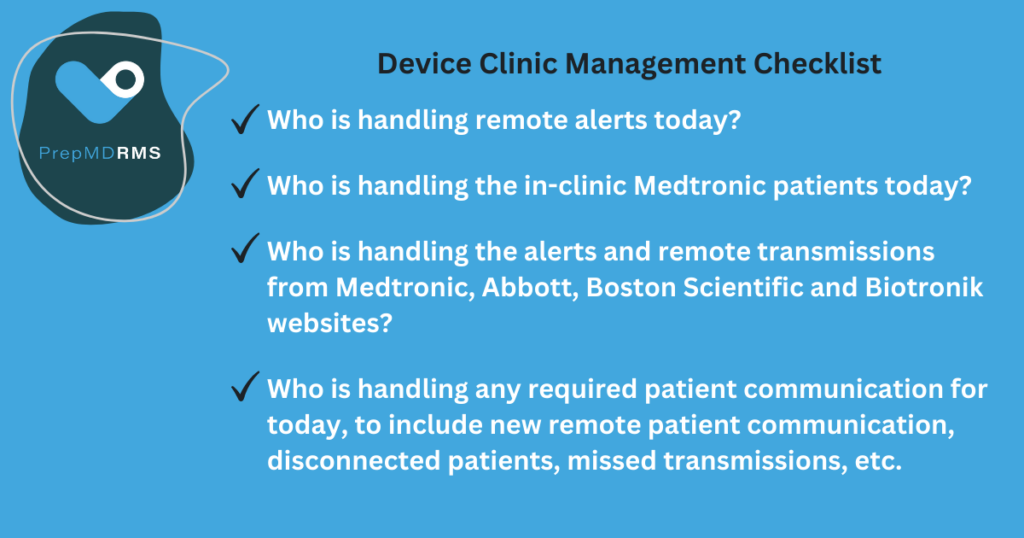

 At a recent PrepMD Webinar a panel discussion was held to share best practices to address the common challenges on cardiac device remote monitoring programs. The panel discussion was led by Rob Lerman, MD, CMO, along with three CCDS-certificated leaders from the
  Kent Seckinger, CCDS, PrepMD 4+years, cardiac device space for 20 years, working split half between the device industry for manufacturers and the other half working for a large device clinic.
 Brianne Terrell, RN, CCDS, PrepMD 1 year, device clinic for about 10 years working in support of device implantation, patient consultation, perioperative device management, in-clinic follow up, and remote monitoring.
  Janet Cedric, CCDS, worked at Prepmd 4.5+ years and in the cardiac space for about 24 years. I’ve managed and started up device clinics.
 “Regardless of best practices, disconnected patient monitors will happen. Patients unplug their monitor and forget about it, they move, or they need their device hardware upgraded. Every clinic should have a plan in place for how to deal with disconnected monitors.”
 “Whenever that’s the case, you may find that your disconnection rate is occurring more quickly than your recovery rate,” said Harris. She emphasized what she sees as the key ingredient to patient education success for patients at device clinics, “Clinics will be most effective if they have a dedicated person or team assigned to managing effective communication with patients to ensure remote monitoring compliance.”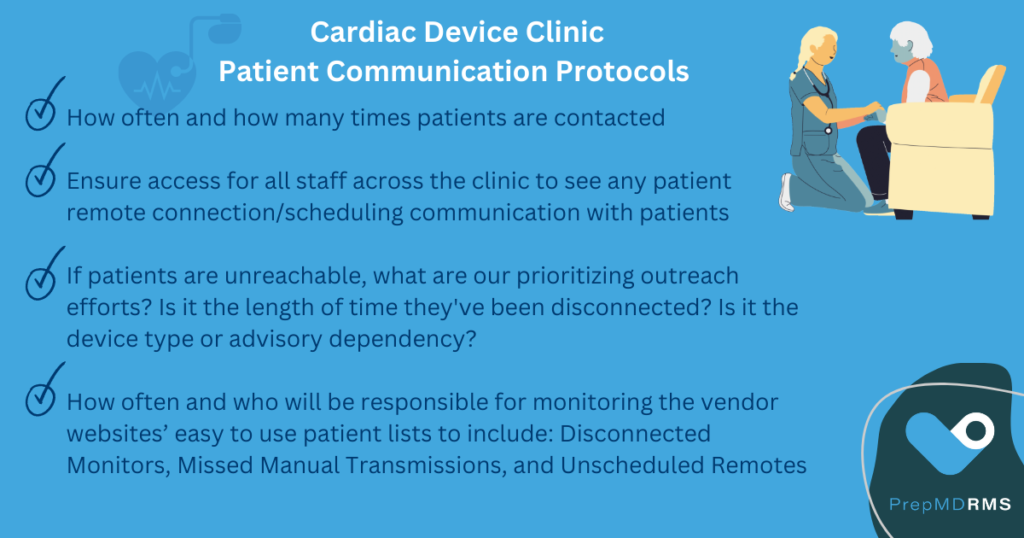

 Greg O’Neal, PrepMD Director of Product & Business Development explained, “In general, we find that many clinics running remote monitoring programs monitor patients less frequently than optimal. This highlights the discrepancy between the ideal monitoring frequency and the actual practices in clinics. The typical reimbursement is often less than 50% of the optimal.”
 “As a healthcare worker I realize that I seriously underestimate the impact on patients receiving an implantable cardioverter-defibrillator (ICD). Besides the patients I have the pleasure of caring for, I do not know anyone personally living with an ICD. Perhaps you do, but I am willing to bet a good majority of clinicians and device specialists do not know firsthand on what life is truly like for ICD patients.”

 . This icon indicates the implanted device is capable of automatic, cycling scheduled transmissions.


